Our Short List of 3
All 3 Picks at a Glance
| Product | Specs | Action |
|---|---|---|
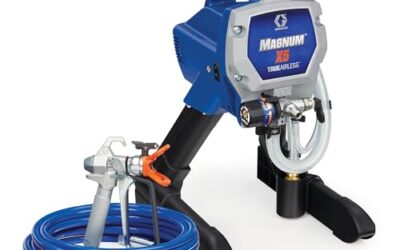
 1. Wagner FLEXiO 590 Handheld HVLP Paint Sprayer | Check price on Amazon | |
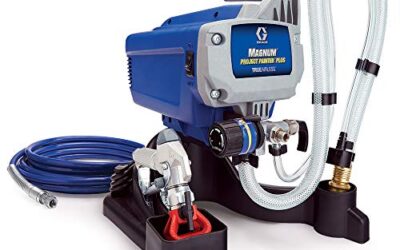
 2. HomeRight Super Finish Max C800971.A HVLP Paint Sprayer | Check price on Amazon | |
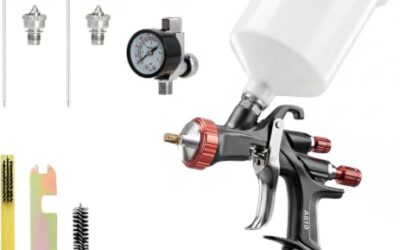
 3. Wagner Control Pro 130 Paint Sprayer Kit | Check price on Amazon |
Key takeaways
- The best inside paint sprayers for walls, cabinets, and trim, compared by overspray control, finish, and cleanup. Three indoor-ready HVLP and HEA picks.
Painting a room with a brush and roller works, but it is slow, and the finish on doors, cabinets, and trim rarely looks as smooth as a sprayed coat. The best inside paint sprayers solve that problem by laying down an even coat in a fraction of the time, with far less brushwork and far fewer visible marks. The catch is that spraying indoors is a different job from spraying a fence outside: overspray lands on floors, furniture, and light fixtures, ventilation is limited, and cleanup happens in a kitchen sink rather than with a garden hose. That is why the right indoor sprayer is not simply the most powerful one. It is the one that gives you control over flow, pattern, and overspray, handles the latex paint you already plan to use, and cleans up without a fight.
This guide focuses on electric sprayers that suit interior work: handheld HVLP models for rooms, furniture, cabinets, and trim, plus one compact HEA airless model for larger interior areas where speed matters more. Every pick below is a real listing on Amazon US with a verified ASIN, and every specification comes from the product listing or the manufacturer. Pick the sprayer that matches your project, then mask the room, ventilate it, and test your settings on cardboard first.
What to Look For
HVLP or airless: the first decision
Most indoor paint sprayers fall into two families. HVLP (high volume, low pressure) sprayers use a turbine to push a large volume of air at low pressure, which produces a soft spray pattern with less bounce-back and less overspray than a traditional airless unit. That makes HVLP the natural first choice for rooms, cabinets, doors, and furniture, where control matters more than raw speed. Airless sprayers, including HEA (high efficiency airless) models, pump paint at high pressure and move material much faster, which suits whole rooms and long walls. HEA models are designed to soften the spray and cut overspray compared with older airless designs, so a compact HEA unit can work indoors, but it still moves more paint per pass than an HVLP handheld, and it demands more masking.
For a bedroom, a kitchen full of cabinet doors, or a set of interior doors and trim, start with HVLP. For repainting every wall in a house, an HEA airless model is worth considering, provided you are comfortable masking an entire room.
Overspray control
Overspray is the single biggest difference between spraying inside and spraying outside. Indoors, every bit of paint that misses the surface settles on something you care about. Look for adjustable flow controls, adjustable spray patterns (horizontal, vertical, and round), and a power or pressure dial with several settings, so you can turn the output down for trim and up for broad walls. Multiple nozzles or tips also help: a wide nozzle covers walls, while a detail nozzle lays a fine coat on cabinet doors and trim without flooding edges.
Paint compatibility and thinning
Interior work almost always means water-based latex paint, and not every sprayer handles it the same way. Some handheld HVLP models spray most unthinned latex straight from the can, while others need the paint thinned before it will flow properly. Thinning adds a step and changes how the paint covers, so a sprayer that handles unthinned latex saves time on every room. Check the listing for the coatings the sprayer supports: latex paint, stains, sealers, and primers cover most interior jobs. If you plan to spray cabinets with an enamel-style latex, confirm the sprayer supports it and that a fine-finish nozzle or tip is included or available.
Cup size, hose length, and weight
Handheld sprayers carry the paint in a cup attached to the gun. A 1.5-quart cup covers several cabinet doors or a good stretch of wall per fill, while a smaller cup means more trips back to the paint can. Stationary sprayers hold more paint in a hopper and connect to the gun through a hose, so a 25-foot hose lets you move around a room while the base unit stays in one place. Weight matters more indoors than outdoors because you will hold the gun at shoulder height for ceilings and above door frames; a gun that weighs around two pounds is far easier on the arm than one that weighs twice as much. For ceilings, a lighter handheld or a hose-fed gun with an extension wand keeps the work comfortable.
Cleanup
Cleanup decides whether you will reach for the sprayer a second time. Latex paint cleans up with water, and the best indoor sprayers come apart into a small number of pieces that rinse clean in a sink. Look for a design with a removable nozzle, a cup that separates from the gun, and a cleaning brush in the box. A five-minute cleanup claim describes a rinse of the fluid path, so still plan on ten to fifteen minutes to wash the nozzle, cup, and filters properly. Never leave latex paint to dry inside a nozzle; dried paint is the most common reason a sprayer clogs on its next use.
Noise, ventilation, and safety
Turbine sprayers make noise, and in a closed room that noise feels louder than it does outdoors. If you are sensitive to sound, look for a model the manufacturer describes as quieter than a standard airless unit, and plan to wear hearing protection on long sessions. Ventilation is not optional: open windows, run a fan that exhausts air outside, and wear a respirator rated for paint spray, not a simple dust mask. Keep the room clear of furniture or cover everything with plastic sheeting, and keep children and pets out of the room until the paint is dry and the air has cleared.
Top Picks
1. Wagner FLEXiO 590 Handheld HVLP Paint Sprayer
Wagner FLEXiO 590 Handheld HVLP Paint Sprayer
The Wagner FLEXiO 590 is the most versatile handheld HVLP sprayer for indoor work, and it is the first sprayer to consider if you want one tool for walls, ceilings, cabinets, furniture, and trim. Its X-Boost turbine is designed to spray most unthinned latex paint, which removes the thinning step that slows down many handheld sprayers. The kit includes two nozzles: the iSpray nozzle for broad surfaces such as walls and ceilings, and the Detail Finish nozzle for cabinet doors, trim, and furniture, where a finer coat matters.
Control is the reason this model suits interiors. The X-Boost Power Dial has 10 speed settings, so you can turn the flow down for a narrow piece of trim and up for a wide stretch of wall without changing nozzles. The spray pattern adjusts between horizontal and vertical, and between wide and narrow, which lets you match the pattern to the surface instead of fighting it. The 1.5-quart cup covers several cabinet doors per fill, and a second 32-ounce cup is included for smaller batches or a second color. Wagner states that the sprayer covers an 8-by-10-foot surface in 1 minute for stains and 5 minutes for latex paints, at a rate of up to 8.0 gallons per hour.
At 2.1 pounds, the gun is light enough to hold overhead for a ceiling without tiring your arm quickly, and the handheld design means there is no base unit to drag around the room or hose to trip over. Cleanup is a rinse of the cup and nozzle with water for latex paint, and the manufacturer describes the process as taking about five minutes for the fluid path. The FLEXiO 590 is the pick for most indoor projects: a whole room, a kitchen full of cabinet doors, a set of interior doors, or a piece of furniture that needs a smooth coat. If you only buy one indoor sprayer, this is the one that covers the widest range of jobs with the least fuss.
2. HomeRight Super Finish Max C800971.A HVLP Paint Sprayer
HomeRight Super Finish Max C800971.A HVLP Paint Sprayer
The HomeRight Super Finish Max is a compact HVLP spray gun built for the smaller end of indoor work: furniture, cabinets, trim, doors, and craft-scale projects where a fine finish matters more than covering a wall in minutes. It runs on a 450-watt turbine and comes with three brass spray tips and three spray patterns, so you can match the tip and pattern to the coating and the surface. Brass tips hold their shape well and are easy to clean, which matters when you switch between a stain on one project and latex paint on the next.
The listing describes this sprayer as suitable for stains, sealers, and latex paints, and for furniture, cabinets, and trim, which is exactly the indoor work where a big airless unit would be the wrong tool. The gun is small and light in the hand, the nozzle twists to change the spray direction between horizontal and vertical, and the cup detaches for filling and cleaning at the sink. Because it is a simple turbine gun with no base unit and no long hose, setup is a matter of filling the cup, plugging it in, and adjusting the flow. That simplicity makes it a good first sprayer for someone who has never sprayed before, and a good second sprayer for someone who already owns a larger unit and wants a finer tool for detail work.
A compact HVLP gun like this one is not the fastest way to paint four walls and a ceiling; its strength is control and finish quality on smaller surfaces, not speed on broad ones. For a full room, pair it with a roller for the walls or step up to a larger sprayer, and keep the Super Finish Max for the doors, trim, and furniture where it earns its place. For cabinets and furniture, though, it is one of the most practical indoor sprayers available: inexpensive to run, easy to clean, and gentle enough that a careful first-time user can get a smooth coat without flooding the surface.
3. Wagner Control Pro 130 Paint Sprayer Kit
Wagner Control Pro 130 Paint Sprayer Kit
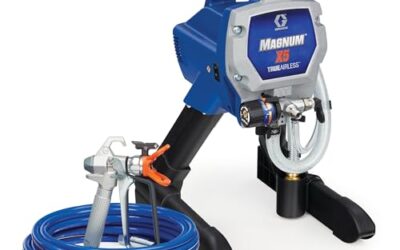
The Wagner Control Pro 130 is the pick for larger indoor jobs where an HVLP handheld would mean too many refills. It is a stationary HEA (high efficiency airless) sprayer: the base unit sits on the floor with a 1.5-gallon hopper, and a 25-foot hose connects it to the spray gun. That layout lets you paint a whole room without stopping to refill, and the hose is long enough to reach across a room or up a stairwell while the base stays put. HEA technology is designed to produce a softer spray with less overspray than a traditional airless sprayer, which is the feature that makes this model viable indoors at all.
The kit version (part number 2422951) includes a 12-inch extension wand for ceilings and high walls, plus two spray tips: a 515 tip for latex paints and a 413 tip for stains and finer coatings. The extension is genuinely useful indoors, since it lets you spray a ceiling from the floor instead of from a ladder. The listing gives a maximum pressure of 1600 PSI, and the gun is a carbon fiber reinforced polymer design with an integrated swivel, which keeps the hose from twisting as you move. At 9.5 pounds for the unit, it is heavier than a handheld, but the weight sits on the floor, not in your hand; the gun itself is light, and the hose carries the paint to it.
This sprayer applies coatings three times faster than a roller, according to the manufacturer, and it sprays unthinned latex and stains, so a full room goes quickly once the masking is done. An airless unit, even an HEA one, moves more paint per pass than an HVLP handheld, so masking needs to be thorough: plastic sheeting over floors and furniture, tape on trim and fixtures, and a clear path to move around the room. Cleanup uses the same water rinse as the HVLP models for latex paint, with the hose and gun flushed through before the paint dries. Choose the Control Pro 130 when the job is a whole room or several rooms, and keep an HVLP handheld for the cabinet doors and trim that need a finer touch.
Comparison at a Glance
| Sprayer | Type | Best For | Paint Capacity | Hose | Nozzles / Tips Included |
|---|---|---|---|---|---|
| Wagner FLEXiO 590 | Handheld HVLP | Walls, ceilings, cabinets, trim, furniture | 1.5-quart cup, plus 32-ounce cup | None (handheld) | iSpray nozzle and Detail Finish nozzle |
| HomeRight Super Finish Max C800971.A | Handheld HVLP | Furniture, cabinets, trim, doors | Cup (handheld) | None (handheld) | 3 brass spray tips, 3 spray patterns |
| Wagner Control Pro 130 Kit | Stationary HEA airless | Whole rooms and large interior areas | 1.5-gallon hopper | 25 feet | 515 and 413 tips, 12-inch extension |
Frequently Asked Questions
Can I use an indoor paint sprayer on walls without thinning the paint?
It depends on the sprayer. The Wagner FLEXiO 590 and the Wagner Control Pro 130 are both described as spraying most unthinned latex paint, so they work straight from the can for most interior wall paints. Compact HVLP guns vary, and some need thin coatings or a small amount of thinning to flow well. Check the listing for the coatings a sprayer supports, and always test the flow on cardboard before spraying a wall. If the spray looks grainy or the gun sputters, the paint may need thinning or a different tip.
How do I keep overspray under control inside a room?
Start with the sprayer, not the masking. Turn the flow or pressure down, use a narrow pattern for edges and trim, and keep the gun moving at a steady distance from the surface. Then mask thoroughly: plastic sheeting on floors and furniture, painter’s tape on trim, outlets, and fixtures, and paper or plastic over anything you cannot move. Ventilate the room with a fan exhausting air outside, and wear a respirator rated for paint spray. HVLP models produce less overspray than airless models, which is one reason they are the usual first choice indoors.
Is an HVLP sprayer or an airless sprayer better for kitchen cabinets?
An HVLP sprayer is usually the better tool for cabinet doors. Cabinet work needs a fine, even coat with minimal overspray, and an HVLP gun with a detail or fine-finish nozzle lays down exactly that. Remove the doors and drawer fronts, lay them flat on sawhorses or a drop cloth, and spray light coats, letting each coat dry before the next. An airless unit can spray cabinets too, but it moves more paint per pass, which makes runs and heavy edges more likely on vertical surfaces.
How long does cleanup take after spraying latex paint indoors?
Plan on ten to fifteen minutes for a proper cleanup. Empty the remaining paint back into the can, rinse the cup and nozzle with water, and flush water through the fluid path until it runs clear. Take the nozzle apart and wash the tip and filters, then dry the parts before storing the sprayer. Never leave latex paint to dry inside a nozzle or hose, since dried paint is the most common cause of clogs. Water-based paint makes indoor cleanup practical at a sink; solvent-based coatings need a different cleaning routine and stronger ventilation.
Conclusion
The best inside paint sprayers are the ones that give you control first and speed second, because indoors the cost of a mistake is paint on everything you did not mask. For most people, the Wagner FLEXiO 590 is the right starting point: a handheld HVLP sprayer that handles most unthinned latex, switches between a broad nozzle for walls and a detail nozzle for cabinets and trim, and weighs little enough to use overhead. If your work is mostly furniture, cabinets, and trim, the HomeRight Super Finish Max is a simpler and lighter tool that puts a fine finish first. And if the job is a whole room or several rooms, the Wagner Control Pro 130 Kit trades the handheld format for a 1.5-gallon hopper and a 25-foot hose, so you can keep spraying without stopping to refill.
Whichever sprayer you choose, the routine is the same: mask the room, ventilate it, wear a respirator, test your settings on cardboard, and clean the sprayer before the paint dries inside it.
Disclosure: As an Amazon Associate, onehourbehind.co earns from qualifying purchases made through links on this page.