Our Short List of 3
All 4 Picks at a Glance
| Product | Specs | Action |
|---|---|---|
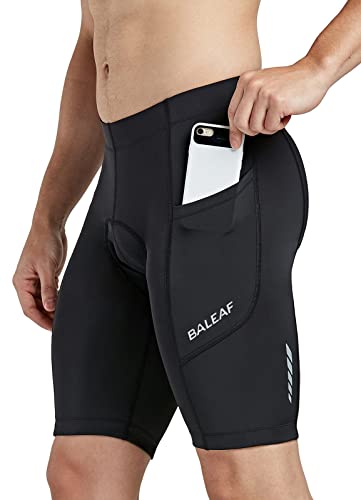 1. baleaf Men’s Bike Shorts 3D Padded — Best Everyday Road Pick | Check price on Amazon | |
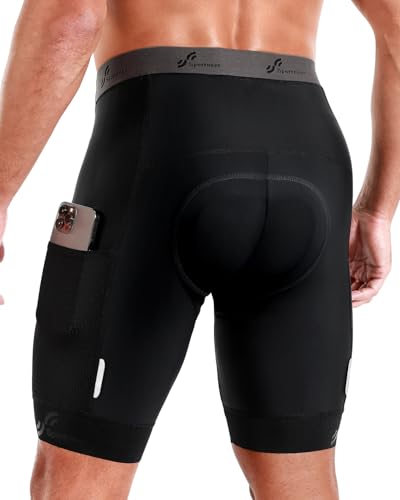 2. Sportneer Padded Bike Shorts for Men — Best With Cargo Pockets | Check price on Amazon | |
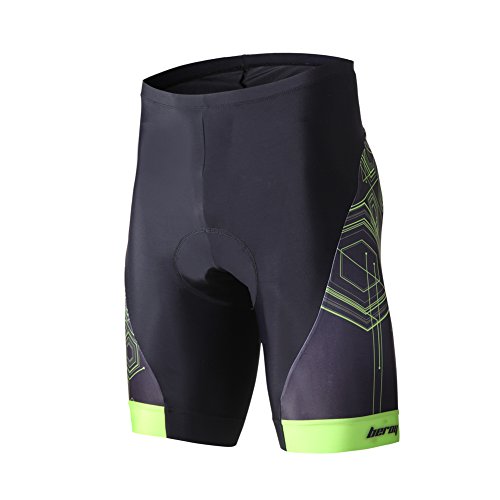 3. beroy Men’s Cycling Shorts — Best Simple, Breathable Pair | Check price on Amazon | |
 5. sponeed Men’s Cycling Shorts — Best Gel Pad for Longer Rides | Check price on Amazon |
Key takeaways
- Compare the best bike padded shorts for men across road, mountain bike, and liner styles — chamois pad types, fabrics, fit, and sizing explained so you can pick the right pair for your rides.
As an Amazon Associate we earn from qualifying purchases.
Affiliate Disclosure: This article contains affiliate links. If you buy through a link on this page, we may earn a commission at no extra cost to you. Product specifications are taken from the manufacturers’ Amazon listings, and we have not personally tested these shorts.
Saddle discomfort is the single most common reason new riders cut rides short, and it is rarely the saddle’s fault alone. A pair of bike padded shorts puts a shaped foam or gel pad — the chamois — between your sit bones and the saddle, spreads pressure over a wider area, and uses smooth, stretch fabric to cut the friction that causes chafing. This guide compares men’s padded shorts across the three styles riders actually choose between: close-fit road shorts, a pocketed everyday short, a baggy mountain bike short with a padded liner, and a gel-padded training short. The focus throughout is on pad construction, fit, and sizing, because those three things — not the brand name — decide whether a pair stays comfortable at mile five and at mile forty.
One note on scope before the picks: this comparison sticks to men’s shorts with a sewn-in pad sold as complete garments. It does not cover women’s models, padded underwear liners sold separately, or full-length tights, so every pick below can be compared directly on pad type, fabric, and fit.
Our Picks at a Glance
| Shorts | Style | Pad | Fabric (per listing) | Standout Trait |
|---|---|---|---|---|
| baleaf Men’s Bike Shorts 3D Padded | Close-fit road short | 3D pad | Stretch fabric, UPF 50+ rated | Pockets plus sun protection |
| Sportneer Padded Bike Shorts for Men | Close-fit short | 4D pad | 82 percent nylon, 18 percent spandex | Two cargo pockets |
| beroy Men’s Cycling Shorts | Close-fit short | 3D foam chamois | 80 percent polyester, 20 percent spandex | Simple, breathable everyday pair |
| KPSUN Men’s Mountain Bike Shorts | Baggy shell with liner | 3D padded liner | Quick-dry shell, mesh liner | Loose fit, adjustable waist |
| sponeed Men’s Cycling Shorts | Close-fit short | Gel pad | Quick-dry stretch fabric | Silicone leg grippers |
1. baleaf Men’s Bike Shorts 3D Padded — Best Everyday Road Pick
The baleaf men’s bike shorts are a sensible first pair and a solid spare pair for experienced riders. The 3D padded chamois is shaped to sit under the sit bones rather than spread evenly everywhere, which is the right design priority: padding where bone meets saddle, less bulk where it does not. The fabric is rated UPF 50+ in the listing, which matters more than most riders expect — the tops of the thighs burn quickly on a summer ride because they face the sun for the entire ride.
What lifts this pair above the most basic options is storage. Side pockets give you somewhere for a phone, keys, or a gel that does not involve a jersey, which makes these shorts practical for commuters and indoor-to-outdoor riders who do not wear a cycling jersey. The fit is a conventional close cycling fit, and baleaf’s size chart should be followed by waist measurement rather than by your jeans size, since cycling shorts are cut tighter than street clothing by design.
Choose these if you want one pair that handles road rides, spin classes, and commuting without looking out of place in any of them. Riders planning very long days may eventually want a denser pad, but as an all-rounder this is the easiest recommendation on the list.
2. Sportneer Padded Bike Shorts for Men — Best With Cargo Pockets
Sportneer’s padded shorts use what the brand calls 4D padding — a multi-zone pad with varying thickness mapped to the contact points — inside an 82 percent nylon and 18 percent spandex body. Nylon-heavy blends tend to feel slightly more durable against saddle abrasion than pure polyester, and the listing describes the fabric as breathable and absorbent, aimed at keeping the pad area drier on longer efforts.
The distinguishing feature is the pair of placed cargo pockets, sized for the small items riders actually carry. Combined with the close fit, that makes these shorts a good match for gravel and mixed-surface riding, where jersey pockets alone often fall short and a hip pack feels like overkill. Sportneer publishes a detailed size chart with waist, hip, inseam, and thigh measurements for each size; use the thigh measurement as well as the waist, because a pad that fits the waist but binds the thigh will ride up and bunch the chamois out of position.
Pick the Sportneer if pockets and a mapped, multi-density pad are your priorities. If you prefer the absolute simplest design with nothing extra, the beroy below pares things back further.
3. beroy Men’s Cycling Shorts — Best Simple, Breathable Pair
Beroy’s men’s cycling shorts keep the recipe classic: an 80 percent polyester, 20 percent spandex body and a 3D padded foam chamois. Polyester’s advantage is moisture handling — it pulls sweat away from the skin and dries quickly, which is exactly what you want in the layer that sits against the saddle for hours. The listing describes the pad as providing protection at the saddle contact area for both newer and regular riders, and the short is offered in a wide run of sizes and colors.
There are no cargo pockets and no complicated panel story here, and that is the point. For indoor training, where pockets are useless and heat is the enemy, and for straightforward road rides, a light, breathable, close-fitting short with a proven pad shape does everything required. The lower complexity also makes these a good benchmark pair: buy them first, learn what you like about pad thickness and leg length, and you will know exactly what to look for in a second, more specialized pair.
4. KPSUN Men’s Mountain Bike Shorts — Best Baggy Option With a Padded Liner
Plenty of riders want the padding without the skintight look, and that is the entire case for the KPSUN mountain bike shorts. A loose outer shell — quick-drying, lightweight, and rated UPF 50+ in the listing — hides a built-in elastic mesh liner with a multi-level, high-density 3D sponge chamois. From the outside they read as ordinary trail shorts; the saddle protection is all underneath.
The waist is adjustable with hook-and-loop straps over an elastic waistband, which solves the classic baggy-short problem of a waist that fits standing up but gaps when you lean over the bike. The listing notes strong category placement among men’s cycling shorts and steady recent sales, suggesting the design has found its audience with trail and casual riders. The shell’s pockets and relaxed cut also make these the most versatile pair here for riders who stop mid-ride, ride to a trailhead, or simply prefer not to wear lycra in public.
The compromise is heat and precision: a two-layer short runs warmer than a single-layer road short, and a liner pad moves slightly more than a pad in a skin-tight short. For trail riding, commuting, and relaxed road miles, that trade is usually worth it.
5. sponeed Men’s Cycling Shorts — Best Gel Pad for Longer Rides
Sponeed builds its men’s shorts around a gel-insert pad — described across the brand’s listings as a 4D gel cushion design — which gives a slightly different feel from plain foam: gel pads tend to feel firmer and more supportive under the sit bones on longer rides, where basic foam can compress and go flat. The fabric is a quick-drying, four-way stretch material, and the legs use widened silicone grippers to hold the short in place without an elastic band digging in.
That gripper detail matters more than it sounds. A short that creeps up the thigh drags the pad forward with it, and a pad that is two centimeters out of place may as well not be there. Sponeed’s listings repeatedly emphasize moisture wicking and quick drying, which suits these shorts to back-to-back training days and indoor sessions as well as road use. Note that this ASIN corresponds to a specific size and color variant of the sponeed short, so confirm your size and color selection on the product page — the pad and fabric are consistent across the range, but the exact listing code changes with the variant.
How to Choose Bike Padded Shorts
Pad type decides long-ride comfort
Foam chamois pads, like the 3D pads in the baleaf, beroy, and KPSUN liner, are light, breathable, and entirely adequate for rides up to a couple of hours. Multi-zone “4D” pads, as in the Sportneer, vary the density so the sit-bone area is firmer and the surrounding area softer, which helps as rides lengthen. Gel inserts, as in the sponeed, resist bottoming out and suit riders who find foam goes flat. More padding is not automatically better: an overly thick pad can bunch, hold heat, and shift pressure to soft tissue. Match pad density to your longest typical ride, not your shortest.
Fit is a function, not a fashion choice
Padded shorts only work if the pad stays exactly under your sit bones, which is why cycling shorts fit close. A loose close-fit short is a contradiction — if the fabric moves, the pad moves. Use the manufacturer’s size chart with a tape measure at the waist and thigh, and when you fall between sizes in a close-fit short, most riders do better with the fit that keeps the pad planted. Baggy styles like the KPSUN cheat this problem with a fitted liner inside a loose shell, which is why the liner, not the shell, is the part that must fit properly.
Style follows the riding you do
Road and indoor riders are best served by close-fit shorts: cooler, simpler, nothing to flap or snag. Trail riders and commuters who want pockets, abrasion cover, and a normal-shorts appearance should look at baggy shorts with padded liners. If you ride both, one of each style covers everything, and the baleaf or beroy make an inexpensive way to fill the close-fit slot.
Fabric, care, and the details that add up
Look for a meaningful spandex content for stretch and shape retention, moisture-wicking yarns, and flat seams anywhere the short meets skin. UPF-rated fabric, offered on the baleaf and KPSUN picks, is a genuine bonus for riders in strong sun. Wash padded shorts after every ride — the pad absorbs sweat by design — and air-dry them; heat degrades both elastic and pad foam over time. Finally, skip underwear under padded shorts: the chamois is designed to sit against skin, and an extra layer reintroduces the seams and friction the short exists to remove.
Frequently Asked Questions
How long should a pair of padded shorts last?
With washing after every ride and air drying, the fabric usually outlasts the pad. When the chamois feels permanently compressed or the leg grippers stop holding, comfort drops off and it is time to replace the pair.
Can I wear padded shorts for indoor cycling?
Yes — indoor training is one of their best uses, because you sit in one position with little standing or coasting, which concentrates pressure. A breathable pair like the beroy, with no pockets to dig in, is ideal on a trainer.
What is the difference between 3D, 4D, and gel pads?
The numbers are marketing shorthand rather than a standard, but in practice 3D means a shaped foam pad, 4D means a shaped pad with multiple density zones, and gel pads add silicone gel inserts at the contact points. Judge by how the pad matches your ride length, not by the number itself.
Should padded shorts feel tight?
Snug, yes; restrictive, no. They should stay in place without effort, with the pad flat against you and no pulling at the waist or thigh. If the pad shifts when you pedal in a test fit around the house, size or style is wrong.
Bottom Line
Start with the style that matches your riding: the baleaf for an everyday road pair with pockets and sun protection, the Sportneer for a multi-zone pad and cargo storage, the beroy for simple breathable value, the KPSUN if you want a baggy trail short with its padding hidden in the liner, and the sponeed if a gel pad and firm leg grippers suit your longer rides. Get the size from the chart rather than habit, keep the pad clean and air-dried, and saddle soreness stops being the thing that ends your rides.