Key takeaways
- The best kids step stools give toddlers a safe boost to sinks, toilets and counters. Compare five non-slip one-step and two-step picks for every age.
A step stool is one of those small purchases that quietly changes daily life with a toddler. The first time your child climbs up, turns on the faucet and washes up without being lifted, the morning routine gets faster for everyone. The same stool helps with potty training, tooth brushing, reaching a light switch and standing at the kitchen counter to help stir, rinse and pour.
Not every stool suits every child, though. A short one-step stool is plenty for a tall preschooler at a low bathroom sink, while a smaller toddler often needs a two-step design to reach the same faucet without standing on tiptoe. Grip matters as much as height: a stool that slides on wet tile or tips when a child leans is worse than no stool at all. This guide compares five well-regarded kids step stools across both formats, with a close look at height, stability, weight capacity and how easy each one is for a small child to carry from room to room.
As an Amazon Associate, we earn from qualifying purchases.
Quick answer
The Dreambaby Step Stool is the simplest place to start: it is light, contoured to fit around a toilet base and covered in grip dots. Taller toddlers do well with the OXO Tot Step Stool, while younger children who need more height should look at the two-step Forbena and Simplay3 Sibling designs. For a wooden option that blends into grown-up rooms, choose the AMBIRD bamboo two-step stool.
Dreambaby Step Stool

The Dreambaby Step Stool is a single-step plastic stool built around one job: helping a small child use the toilet and sink safely. Its front edge is contoured, curving inward so the stool nests closely against the base of a standard toilet instead of leaving an awkward gap a toddler has to step across. That shape also makes it a natural fit in smaller bathrooms where floor space is tight.
The top surface carries 117 rubber grip dots, which give bare feet and socks something to hold onto, and the base has a non-slip design to keep the stool planted on tile. Dreambaby rates the stool to hold up to 175 pounds, so it stays steady when an older sibling hops on, and most toddlers can drag it into position themselves because it is light for its size. The trade-offs are the ones you would expect from a single step: it adds a modest boost, so very small toddlers may still come up short at a high vanity, and the contoured front that works so well at the toilet is less useful at a kitchen counter. As a first stool for potty training, though, it is hard to beat.
OXO Tot Step Stool

The OXO Tot Step Stool takes the same single-step idea and refines the details. It lifts a child about seven inches, which suits preschoolers who need a small, stable boost rather than a climb. The top is textured to keep feet from sliding, and the stool has soft, grippy handles on the sides, so a child can pick it up and carry it between the bathroom and kitchen without it slipping out of small hands.
OXO rates this stool for up to 200 pounds, the highest capacity among the plastic single-step stools in this guide, and the wide, stable footprint inspires confidence when a child shifts weight from one foot to the other while brushing teeth. The smooth plastic wipes clean in seconds, which matters for a product that lives next to a toilet. What it does not do is grow with a very young toddler: seven inches is a gentle lift, and children under about two may still not reach a standard sink comfortably. Think of it as the stool for the three-to-five crowd, and for parents who want one durable stool that can also serve as an occasional adult step in a pinch.
Simplay3 Sibling Step Stool
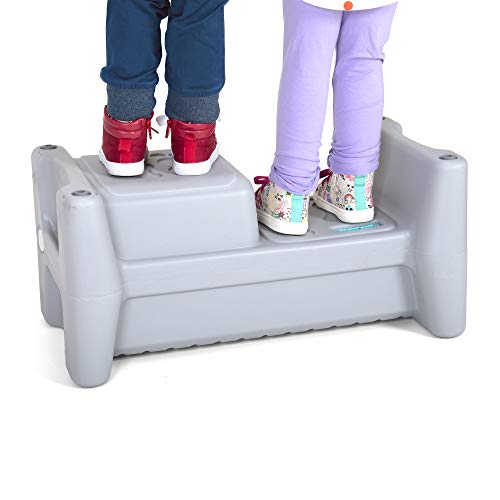
The Simplay3 Sibling Step Stool solves a problem the other stools in this guide do not: two children who both want the sink at the same time. It is an extra-wide two-step design, with a low first step of about five inches and a top step of about ten and a half inches, and the broad platform leaves room for siblings to stand side by side while they wash hands or brush teeth. For a single child, that width simply means more room to turn around safely.
The stool is molded from durable plastic with a textured surface, and its size makes it one of the more stable options here once it is in place. The flip side of that size is portability: this is the stool you park in the main bathroom rather than carry around the house. One brand note worth knowing: Simplay3 recalled its Toddler Tower, a different product with model number 41807, in 2023. This step stool is a separate, simpler design and was not part of that recall. If you have twins, close-in-age siblings or a single toddler who likes maximum standing room, this is the pick.
Forbena 2-Step Toddler Stool
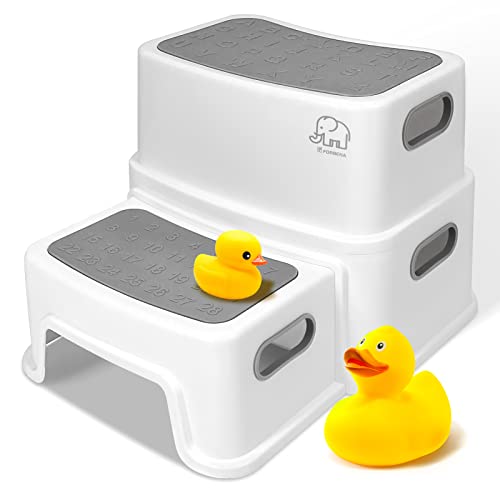
The Forbena 2-Step Toddler Stool is built for the youngest climbers in the group. Two steps let a small toddler reach a standard bathroom sink in stages instead of hauling up one tall step, and the design puts eight rubber feet on the floor, more contact points than most plastic stools offer, which helps it stay put on wet tile. Forbena rates it to hold up to 200 pounds, so it will not be outgrown quickly.
Assembly is tool-free, with the pieces snapping together out of the box, and a built-in carrying handle makes it easy for a parent, or an older toddler, to move it between rooms. The steps themselves have a non-slip texture for wet feet. Because it is a two-step stool, it takes up more floor space than a single-step model, and the lighter plastic construction can shift if a child deliberately rocks it, so it works best pushed against the vanity or toilet rather than standing in the middle of the room. For potty training and sink routines with a child under three, it is the most purpose-built option here.
AMBIRD Bamboo Two-Step Stool

The AMBIRD two-step stool is the one to pick when the stool will live in a visible spot and you would rather it looked like furniture. It is made from bamboo rather than plastic, with two steps, side armrests that double as carrying handles, a reinforcing crossbar and non-slip pads. AMBIRD rates it to hold up to 300 pounds, the highest capacity in this guide, so it genuinely doubles as a step for adults reaching a high shelf.
That strength comes with weight: a bamboo stool is heavier than the plastic models, and while the armrests help, a young toddler will not be carrying this one around independently. Bamboo also asks for a touch more care than plastic, since standing water should be wiped up rather than left to sit. In return you get a sturdy, stable two-step height that works at bathroom sinks and kitchen counters, and a natural finish that sits comfortably in a bedroom or playroom. For families who buy one stool and expect it to last through several children, this is the long-term option.
How to choose
Start with height. Measure from the floor to the rim of your sink or the top of the toilet, then think about where your child’s hands and chin need to be. A single step of about seven inches suits most three- and four-year-olds at a standard vanity. Younger or shorter toddlers usually need a two-step stool, which spreads the climb into two smaller rises and adds several extra inches of reach at the top.
Next, look at the base and the top surface. Rubber feet or a rubberized base keep a stool from skating on tile, and a textured or dotted top keeps feet from sliding, especially with wet floors and socks in the mix. A stool that is wide for its height is harder to tip than a narrow, tall one, and a contoured front is a real advantage at the toilet because it closes the gap a child might otherwise misjudge.
Weight capacity is the third check. Every stool in this guide is rated for at least 175 pounds, which means an adult can steady a child by stepping on it too, and none of them will be outgrown on strength grounds. Finally, consider who moves the stool. Light plastic stools with handles get carried by toddlers themselves, which builds independence; heavier wooden stools tend to stay in one room, which can be a plus or a drawback depending on your home.
Who should skip
Skip the single-step stools if your child is under two or cannot yet climb confidently; a two-step design or waiting a few months is the safer call. Skip the extra-wide Simplay3 if your bathroom is small, since it trades floor space for standing room. Skip the bamboo AMBIRD if the stool will sit in a constantly wet spot or needs to travel between floors daily. And skip step stools entirely, in favor of a supervised lift, if your child is a determined climber who treats furniture as a jungle gym; no stool replaces supervision at the sink or toilet.
FAQ
What age is a kids step stool for?
Most children start using a step stool between 18 months and three years, beginning with potty training and hand washing. Two-step stools suit the younger end of that range because each rise is smaller. Children typically keep using a stool at the sink until around age five or six, when they can reach comfortably on their own.
Is a one-step or two-step stool better?
It depends on the gap your child needs to close. A one-step stool is lighter, smaller and easier to carry, and it is enough for taller toddlers and preschoolers. A two-step stool gives more total height and an easier climb for smaller toddlers, at the cost of a bigger footprint. Measure your sink height against your child’s reach before choosing.
How do I stop a step stool from sliding on tile?
Choose a stool with rubber feet or a non-slip base and a textured top, and place it on a dry floor whenever possible. Pushing the stool flush against the vanity or toilet base also limits how far it can move. Wiping dust and water from the feet keeps the grip working as intended.
Can adults stand on a kids step stool?
Only within the stated weight limit. The stools in this guide are rated between 175 and 300 pounds, so a lighter adult stepping on briefly to steady a child or reach a shelf is within spec for most of them. They are not a substitute for a household step ladder, and standing on any stool should be brief and careful.
Final verdict
The right stool is the one that closes the gap between your child and the sink without wobbling, sliding or tipping. For a first potty-training stool, the Dreambaby is the easiest recommendation. For toddlers who need real height, the Forbena and Simplay3 Sibling two-step designs deliver it in different footprints, the OXO Tot is the polished single-step for preschoolers, and the AMBIRD bamboo stool is the buy-it-for-years wooden option. Measure once, check the grip, and let your child start doing more at the sink.
Product and ASIN Reference
| Product | ASIN |
|---|---|
| Dreambaby Step Stool | B016P2STRW |
| OXO Tot Step Stool | B0759QF6T2 |
| Simplay3 Sibling Step Stool | B07SFKSXMR |
| Forbena 2-Step Toddler Stool | B0BDVQWF8D |
| AMBIRD Bamboo Two-Step Stool | B09V5CQ1YS |