Key takeaways
- Always use a correctly fitting helmet that meets your local standard, and read the helmet maker’s fit guidance.
- Assemble the bike following the manual, or have a bike shop do it. Check tightness of the stem, handlebars, wheel nuts and brakes before every ride, as the maker’s manual describes.
- Set the saddle so both feet can reach the ground comfortably, and adjust brake levers to suit small hands.
- Keep young riders away from roads, steep slopes and water, and supervise them.
- Store the bike dry, and wipe and lightly lubricate the chain as the manual advises.
- Replace worn tires or brake parts with those the maker specifies.
For a child about 4 to 6 years old and roughly 42 to 48 inches tall, the Huffy Moto X 16-inch is the clearest budget fit; for a first ride at 1 to 4 years, the Strider 12 Sport balance bike is the better start, though it may sit near or above a $150 ceiling depending on the listing; and the Schwinn Koen and Elm 16-inch bikes suit kids around 5 to 7 but one listing for each sits above this cap. The right bike depends far more on your child’s height and inseam than on age or on any single model, so measure first and shop second.
Our top picks



As an Amazon Associate we earn from qualifying purchases at no extra cost to you.
At a glance: kids bikes worth considering
| Bike | Best for | Key stated specs | Limits |
|---|---|---|---|
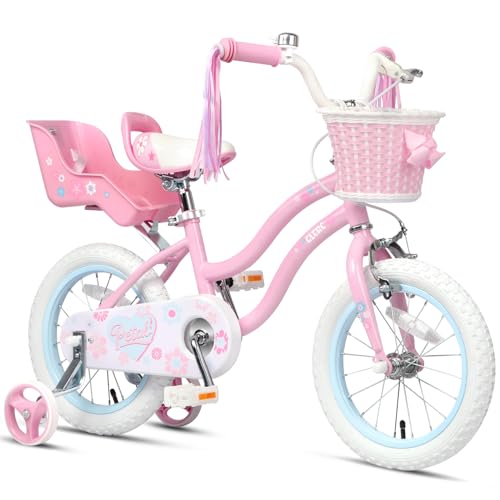
| Huffy Moto X 16 in (model 71809) | Ages 4 to 6, riders about 42 to 48 in tall (the maker’s page shows both 48 and 49) | Steel frame, one speed, front hand brake plus rear coaster brake, chainguard, removable training wheels included | Steel makes it heavier than premium alloy bikes |
| Huffy Electro-Light 16 in | Ages 4 to 6 who like lights | Maker lists a 16 in steel-frame bike with LED lights, coaster brake and removable training wheels, for riders about 42 to 48 in tall | LED features add cost and may sit above this cap |
| Huffy So Sweet 16 in | Ages 4 to 6 who want a traditional girls style | The maker lists it as a 16 in steel-frame bike for ages 4 to 6 and about 42 to 48 in tall, with a coaster brake, chainguard and removable training wheels | Cosmetic extras; same class of steel build |
| Schwinn Koen 16 in | Ages 5 to 7 | Hi-ten steel frame, rear coaster brake, removable training wheels, chainguard; weight listed around 21 lb; the maker’s page lists ages 5 to 7, while some retail listings say 3 to 7 | Listings differ on age and brakes, and a newer listing may be above this cap |
| Schwinn Elm 16 in | Ages 5 to 7, kids who want a basket | Steel frame with SmartStart sizing, 16 in tires, tool-free adjustable saddle, training wheels, chainguard, basket; about 21 lb | Listings differ on brakes; a newer listing is above this cap |
| Strider 12 Sport balance bike | First bike at ages 1 to 4 | The maker lists ages 1 to 4, 3.0 kg (6.7 lb), seat height 11 to 17 in and up to 60 lb rider weight | No pedals, so it is a stepping stone to a pedal bike |
| woom 3 (now sold as the woom GO 3) 16 in | Ages 4 to 6 where weight matters most | The maker lists rider height of 41 to 47 in, saddle height of 19.1 to 25.2 in and a weight of about 13 lb | Premium tier, normally above a $150 cap; included only as the higher-tier alternative |
Getting the size right
Size is the single most important choice, and it is set by wheel diameter, which is best matched to your child’s height and inseam. A 16-inch bike roughly fits children from 38 to 49 inches tall, though brands differ. Huffy’s chart lists 42 to 49 inches for ages 4 to 6 on a 16-inch wheel, and its GRM line is sized lower at 39 to 46 inches. A third-party chart for Schwinn gives about 38 to 48 inches, which is older and not from the maker. The woom 3 (now sold as the GO 3) lists 41 to 47 inches for the rider and a saddle range of 19.1 to 25.2 inches, so read that second figure as saddle height rather than a measure of your child. Where sources differ, treat the maker’s range for the specific model as the guide.
To check fit, have your child stand against a wall to measure height, then measure the inseam barefoot from crotch to floor. On the bike, the child should be able to sit on the saddle with a slight bend at the knee when the pedal is at its lowest, and touch the ground with the balls of both feet when on a balance bike or with training wheels removed. Schwinn’s SmartStart page states that most 5-year-olds ride a 16-inch bike. If your child sits between sizes, a smaller bike they can control is safer than a bigger bike they will grow into.
Features that matter on a first pedal bike
Brakes
A coaster brake works by pedalling backwards, which suits kids who are too small to squeeze a hand lever hard. Huffy lists the Moto X with both a front hand brake and a rear coaster brake, which gives a second option as the child grows. Schwinn’s older listings for the Elm mention a front caliper brake as well; newer listings mention only the coaster brake, so listings differ. A hand lever should be adjustable for small fingers.
Training wheels
Both the Huffy Moto X and the Schwinn Koen and Elm are listed with removable training wheels. They are useful for confidence at the start. Many parents remove them early once the child can balance, and a balance bike like the Strider 12 Sport skips them altogether, which is why the maker positions it for ages 1 to 4.
Weight
The lighter the bike relative to the child, the easier it is to pedal and steer. Schwinn lists about 21 pounds for its 16-inch Koen, and the Elm is similar. The Strider 12 Sport is listed at 6.7 pounds. Steel frames at this price are heavier than aluminium frames, and the woom bikes are known for weight savings, which is why it appears as a premium option rather than a budget pick.
Chainguard and handlebars
A chainguard keeps trouser legs and fingers away from the chain. All the pedal bikes here list one. BMX-style bars suit an upright, confident riding position and are common on Schwinn bikes of this size.
Picking by situation
| Pick this if… | Choose | Why |
|---|---|---|
| Your child is 42 to 49 in tall | Huffy Moto X 16 in | The maker lists this height range and ages 4 to 6 |
| Your child is 5 to 7 and wants a basket | Schwinn Elm 16 in | Basket and tool-free saddle adjustment |
| Your child is 5 to 7 and wants a sportier look | Schwinn Koen 16 in | Number plate and chainguard |
| Your child is 1 to 4 and new to riding | Strider 12 Sport | Light, adjustable seat height, no pedals |
| You can stretch beyond the cap for a light bike | Woom 3 16 in | Lighter, premium build; ages 4 to 6 |
Budget tiers inside the cap
Lower end. Huffy’s steel 16-inch bikes sit at the more affordable end and usually include training wheels and a chainguard. They are heavy, but robust and widely available.
Mid-range. The Strider 12 Sport and Schwinn 16-inch bikes sit around the cap, and depending on the listing, a Schwinn may be above it. This tier typically brings better sizing guidance, adjustable saddles and a more tailored fit.
Premium. The Woom 3 is the example here. It is not a budget buy, and a limited budget is better not stretched toward it unless weight and resale value are priorities. If you want a lightweight bike within a firm $150 limit, a balance bike is the better value, because the child can skip the training wheel stage and learn to balance first.
Safety and care
- Always use a correctly fitting helmet that meets your local standard, and read the helmet maker’s fit guidance.
- Assemble the bike following the manual, or have a bike shop do it. Check tightness of the stem, handlebars, wheel nuts and brakes before every ride, as the maker’s manual describes.
- Set the saddle so both feet can reach the ground comfortably, and adjust brake levers to suit small hands.
- Keep young riders away from roads, steep slopes and water, and supervise them.
- Store the bike dry, and wipe and lightly lubricate the chain as the manual advises.
- Replace worn tires or brake parts with those the maker specifies.
Alternatives
- Second-hand lightweight bikes. A used premium kids bike can fit inside the cap, but check the frame, brakes and tires for wear.
- Balance bikes with a later pedal bike. Starting on a balance bike like the Strider 12 Sport, then moving to a 16-inch pedal bike, often avoids the training wheel phase.
- Larger wheel sizes. If your child is already tall for their age, a 20-inch bike may be a better fit than a 16-inch one.
Frequently Asked Questions
What size bike does a 5-year-old need?
Most 5-year-olds ride a 16-inch bike, according to Schwinn’s SmartStart guidance, but fit depends on height and inseam. Huffy lists 42 to 49 inches for its 16-inch Moto X. Measure your child and compare with the maker’s range for the model.
Should my child start on a balance bike?
A balance bike teaches steering and balance without pedals, and the Strider 12 Sport is listed by the maker for ages 1 to 4. Many children move to a pedal bike once they are gliding comfortably, with or without training wheels. Either route is reasonable.
Do kids bikes need hand brakes?
A coaster brake is easier for small children, and a hand brake builds the habit of braking with a lever. Bikes that include both, like the Huffy Moto X, offer a transition. Make sure the lever can be reached and squeezed by small hands.
When should we remove training wheels?
When the child can balance and steer with confidence, usually after practice on flat, quiet ground. There is no fixed age. Raise them gradually or remove them following the maker’s manual.
Is a lightweight bike worth it?
A lighter bike is easier for a small child to handle, but the price is higher. Lightweight premium bikes such as the Woom 3 sit above a $150 cap. If budget is firm, a balance bike or a well-sized steel bike is a sensible choice.
How long will a 16-inch bike last?
Children often outgrow a 16-inch bike in a year or two. Adjustable saddles and handlebars extend that a little, and a bike in good condition can be handed down. Check brakes, chains and tires before passing it on.