Key takeaways
- Compare mosquito repellent concentrates made for hose-end, pump, and tank sprayers, with mixing, coverage, and label checks to match a formula to your yard.
A personal spray bottle treats skin and clothing. A sprayer treats the yard itself, and that difference changes what you should buy. If mosquitoes are waiting in the shrubs, under the deck, along the fence line, and around damp corners of the lawn before anyone sits down, the useful product is a liquid concentrate that is mixed with water, or attached to a hose-end sprayer, and applied to the places where mosquitoes rest during the day. This guide covers only that type: yard concentrates designed for sprayer application outdoors. It does not include candles, wearable bands, tabletop devices, or ready-to-use personal sprays, because none of those solve the same job.
That focus matters for safety as well as for results. A concentrate is only appropriate when its label lists the sprayer you own, the outdoor surfaces you plan to treat, and the dilution or hose-end setting for that use. Labels differ sharply between formulas, even when two bottles sit side by side and promise yard mosquito control. One product may be built around a built-in hose-end sprayer with no separate mixing, another may need careful measuring into a pump or backpack tank, and a plant-oil concentrate may be refilled into its own hose-end bottle at a stated ratio. Reading those directions first, before comparing coverage claims, is the fastest way to narrow the list.
Disclosure: As an Amazon Associate, we earn from qualifying purchases made through links in this article, at no extra cost to you.
Quick Picks
- Easiest hose-end start: Cutter Backyard Bug Control Spray Concentrate, 32 fluid ounces — a concentrate bottle with a QuickFlip hose-end sprayer, listed as treating up to 5,000 square feet of lawn, with lambda-cyhalothrin as the active ingredient named on the listing.
- Plant-oil concentrate for refills: Wondercide Outdoor Pest Control Spray Concentrate, 32 ounces — a concentrate with natural essential oils, listed for lawns, patios, and landscapes, and intended to refill a hose-end sprayer bottle.
- Large bifenthrin container for tank sprayers: Bifen I/T concentrate, 96 fluid ounces — a 7.9 percent bifenthrin liquid concentrate in a large jug format suited to repeated mixing for pump or backpack sprayers, following its label rates.
- Compact bifenthrin concentrate: Compare-N-Save 7.9 Percent Bifenthrin Concentrate, 8 ounces — a small bottle of bifenthrin concentrate listed for indoor and outdoor insect control, mixed with water for sprayer application.
Use the quick picks to identify a format first. Then check the full notes below on container size, active ingredient, and application method, because the right format for a single hose-end treatment is rarely the right format for a season of backpack sprayer work on a larger property.
1. Cutter Backyard Bug Control Spray Concentrate, 32 Fluid Ounces
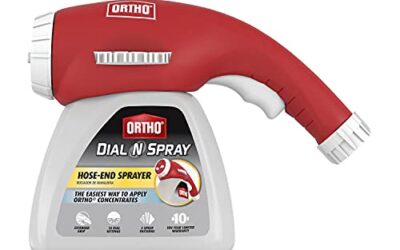
Cutter is the most straightforward entry on this list for a homeowner who owns a garden hose but not a separate tank sprayer. The listing describes a 32 fluid ounce bottle of spray concentrate fitted with a QuickFlip hose-end sprayer: you attach the bottle to the hose, flip the switch, and spray. The listing states that no mixing is required for this format, and that the bottle treats up to 5,000 square feet of lawn. It also names lawns, landscapes, and outdoor surfaces as the treatment areas, and lists mosquitoes, fleas, and listed ant types among the insects it kills on contact with the application described.
The active ingredient named on the listing is lambda-cyhalothrin. The model number given in the product information is HG-61067. The listing also states a control period of up to 12 weeks against house crickets, carpenter ants, harvester ants, lady beetles, and earwigs — note that this longer period is stated for those listed insects, so do not assume the same interval automatically applies to every pest or every surface. For mosquitoes specifically, follow the label directions for the treated area and for reapplication after rain or mowing, rather than relying on a single headline interval.
This format suits a typical suburban yard where the goal is one even pass over lawn and planting beds without measuring concentrate into a tank. Its limit is flexibility: a hose-end system ties you to hose reach, water pressure, and the sprayer head supplied with the bottle. If your property has areas far from a spigot, or you want to spot-treat shaded resting sites with a finer tank mix, a measure-and-mix concentrate below will fit better.
Specifications
- Brand: Cutter
- Product form: Liquid spray concentrate with hose-end sprayer
- Container size: 32 fluid ounces
- Active ingredient named on listing: Lambda-cyhalothrin
- Model number: HG-61067
- Stated coverage: Up to 5,000 square feet of lawn
- Application: QuickFlip hose-end sprayer attached to a garden hose, no mixing required per listing
- Listed treatment areas: Lawns, landscapes, and outdoor surfaces
Pros
- No separate tank or measuring step for the hose-end application described
- Clear stated lawn coverage figure helps estimate how many bottles a yard needs
- Purpose-built for lawn and landscape spraying rather than skin application
Cons
- Requires a garden hose and a reachable spigot for every treatment area
- Hose-end delivery gives less control over dilution than a measured tank mix
- Longer control interval on the listing applies to specific listed insects, not uniformly to all pests
2. Wondercide Outdoor Pest Control Spray Concentrate, 32 Ounces

Wondercide takes a different formulation route. Its outdoor concentrate is listed as a plant-powered product made with natural essential oils, positioned for lawns, patios, and landscapes, and described on its packaging as a concentrate that kills and prevents mosquitoes, ants, fleas, and ticks, and repels mosquitoes, ants, and ticks. Instead of a synthetic pyrethroid active, the appeal here is the essential-oil formula and the refill model: you keep a hose-end sprayer bottle and refill it from the concentrate container, rather than buying a new ready-to-spray bottle each time.
Brand instructions shown for the refill process describe pouring a measured amount of concentrate into the saved ready-to-use sprayer bottle, filling the rest with warm water, and shaking until the mixture turns white, then attaching the bottle to a garden hose for yard application. That makes the exact refill ratio important. Follow the ratio printed on the concentrate bottle you receive, because concentrate strength and refill directions can vary by container size, and the 32 ounce size in this listing is not interchangeable with the gallon size without checking the label.
This is a sensible pick for households that prefer an essential-oil formula around play areas and patios and are willing to apply it on the schedule its label directs. Plant-oil yard products generally rely on contact and regular reapplication as directed, so set expectations from the label rather than from a synthetic concentrate’s residual claims. Keep the concentrate stored as directed, keep the refill bottle clearly identified, and never transfer any yard concentrate into a food or drink container.
Specifications
- Brand: Wondercide
- Product form: Liquid outdoor pest control spray concentrate
- Container size: 32 ounces
- Formula type: Natural essential oils, described as plant-powered on the listing and packaging
- Listed uses: Lawns, patios, and landscapes
- Application: Refill a hose-end sprayer bottle at the ratio on the label, then attach to a garden hose
- Packaging claims noted: Kills and prevents mosquitoes, ants, fleas, and ticks; no wait time wording shown on packaging
Pros
- Essential-oil formula for buyers who want to avoid synthetic pyrethroid concentrates
- Refill model reuses the hose-end sprayer bottle instead of replacing it each time
- Clearly positioned for the same outdoor surfaces homeowners most often treat
Cons
- Requires keeping and correctly refilling the matching sprayer bottle
- Refill ratio must be checked on the actual bottle, as sizes differ
- Reapplication schedule should be taken from the label, not assumed from other yard products
3. Bifen I/T Concentrate, 96 Fluid Ounces
Bifen I/T is the tank-sprayer workhorse format on this list: a large jug of liquid concentrate containing 7.9 percent bifenthrin, a synthetic pyrethroid. Products of this type are mixed with water in a pump, backpack, or other tank sprayer at the rate printed on the label for the target site, then applied as a coarse spray to outdoor resting and perimeter areas the label lists, such as vegetation, building foundations, and other non-food outdoor surfaces. The 96 fluid ounce container size is the point of this pick — it holds enough concentrate for repeated mixing across a larger property or a full season of label-directed applications, without buying a small bottle each time.
Bifenthrin concentrates are broad in scope. Reference material for this product type describes control of a wide range of insects, including mosquitoes, and describes the concentrate as water-based, odorless in its dried form in some product literature, and non-staining when used as directed. Treat those as general characteristics of the formulation type, not as permission to spray anywhere: the label for the specific bottle controls where it may be applied, how much may be mixed per gallon of water, how far to keep applications from water bodies and blooming plants visited by pollinators, and which states restrict its sale or use. Some bifenthrin products carry state restrictions, so confirm the listing and label allow shipment to and use in your state before ordering.
Choose this format if you already own a tank sprayer, are comfortable measuring concentrate accurately, wearing the protective equipment the label requires, and keeping people and pets away from treated areas until sprays have dried, as the label directs. If you do not want that measuring and handling responsibility, the hose-end Cutter or refillable Wondercide formats above are simpler, even if they offer less mixing control.
Specifications
- Brand: Bifen I/T (Control Solutions product type)
- Product form: Liquid insecticide concentrate for mixing with water
- Container size: 96 fluid ounces
- Active ingredient: Bifenthrin, 7.9 percent
- Application: Mixed in a pump, backpack, or tank sprayer at the label rate for the treatment site
- Listed target range for this product type: Broad insect range including mosquitoes, per product literature
- Handling: Measure concentrate, follow label protective equipment and re-entry directions
Pros
- Large container suits repeated tank mixing for larger properties
- Tank application allows targeted treatment of shaded resting vegetation and perimeters
- Concentrate format means one jug replaces many ready-to-use bottles
Cons
- Requires a separate sprayer, accurate measuring, and label-directed protective equipment
- Broad-spectrum pyrethroid, so label setbacks from water and blooming plants are essential
- May be restricted in some states; the buyer must confirm before ordering
4. Compare-N-Save 7.9 Percent Bifenthrin Concentrate, 8 Ounces
Compare-N-Save offers the same headline active concentration — 7.9 percent bifenthrin — in a much smaller bottle. The listing title describes an 8 ounce container of concentrate for insect control, and the product description states that it controls insects indoors and outdoors. For this guide, only the outdoor, sprayer-applied use matters: the concentrate is mixed with water and applied with a sprayer to the outdoor sites its label lists. The compact size suits a smaller yard, a first measured-mix application, or a homeowner who wants to treat a defined perimeter and vegetation zone without storing a large jug of concentrate.
A small bottle also changes the storage and handling picture. There is less concentrate to store securely away from children and pets, and less to account for if you treat only a few times per season. The trade-off is obvious: on a large property with repeated applications, an 8 ounce bottle will be finished quickly, and the per-application measuring work is the same as with the larger Bifen container. As with any bifenthrin concentrate, the label is the authority on mixing rate per gallon, treated surfaces, protective equipment, drying time before re-entry, and environmental setbacks. Do not borrow a mixing rate from a different bifenthrin brand, even at the same stated concentration, because inert ingredients and label directions can differ.
This pick makes most sense as a measured, deliberate choice: small property, clear label, one sprayer, and a defined set of outdoor resting areas to treat. If your yard is large or you expect frequent label-directed reapplications, the 96 ounce format above is the more practical container, while hose-end formats remain easier for a single lawn-wide pass.
Specifications
- Brand: Compare-N-Save
- Product form: Liquid bifenthrin concentrate
- Container size: 8 ounces, per listing title
- Active ingredient: Bifenthrin, 7.9 percent
- Application: Mixed with water for sprayer application, at the rate on the product label
- Listing scope: Indoor and outdoor insect control; this guide covers the outdoor sprayer use only
- Handling: Follow label directions for mixing, protective equipment, and re-entry after drying
Pros
- Compact bottle is easier to store securely and to finish within a season
- Same bifenthrin concentration class as larger professional-style concentrates
- Suits a small, defined outdoor treatment area without buying a large jug
Cons
- Small volume runs out quickly on larger properties
- Still requires accurate measuring and full label precautions despite the small size
- Mixing rates must come from this product’s own label, not from another brand
How to Choose a Mosquito Repellent for a Sprayer
Start with the sprayer you actually own. A hose-end concentrate needs a hose, a spigot, and enough reach. A tank concentrate needs a pump, backpack, or powered sprayer in good working order, with a nozzle that produces the spray pattern the label calls for. Do not buy a concentrate whose label does not list your application method.
Match the active ingredient to your preference and your site. Lambda-cyhalothrin and bifenthrin are synthetic pyrethroids with broad insect ranges and label-directed residual applications. Essential-oil concentrates offer a plant-based formula and a refill routine. Neither category should be sprayed near water, blooming plants in pollinator use, vegetable gardens, or children’s play equipment unless the specific label allows that site.
Do the coverage arithmetic before ordering. Note your lawn and landscape area, the coverage or mixing yield stated for the product, and how many applications you realistically expect. A stated figure such as treating up to 5,000 square feet describes one bottle under the listing’s conditions; a tank concentrate’s yield depends entirely on the label rate you mix.
Plan the application, not just the purchase. Treat in calm conditions so spray stays on target, focus on shaded vegetation, under-deck areas, and other resting sites the label lists, keep people and pets out until the label’s drying or re-entry condition is met, and store concentrate locked away in its original labeled container.
Check legal and label restrictions. Pesticide labels are legal directions. State restrictions, setbacks from wells and water bodies, and pollinator protections on the label override any general buying advice, including this guide.
Frequently Asked Questions
Is a sprayer concentrate the same as a personal mosquito repellent?
No. Personal repellents are applied to skin or clothing. Every product in this guide is a yard concentrate applied with a hose-end, pump, backpack, or tank sprayer to outdoor surfaces listed on its label.
Can I put any of these concentrates in a fogger or mister?
Only if that product’s label specifically lists fogging or misting equipment and gives directions for it. A concentrate labeled for hose-end or tank spraying should not be assumed suitable for a thermal fogger, a cold fogger, or an automatic misting system.
How long does a yard spray treatment last?
It depends on the active ingredient, the surface, rain, mowing, and the label rate used. One listing in this guide states a longer control period for specific listed insects, which is not a guarantee for mosquitoes on every surface. Use the reapplication interval printed on the bottle you buy.
Are these products safe around children and pets?
Follow the label exactly. Yard concentrates generally require keeping people and pets away from treated areas until sprays have dried or until the label’s stated condition is met, and some plant-oil packaging makes its own specific claims. The label for the product in your hand is the only reliable source for its re-entry directions.
What if mosquitoes are breeding in standing water?
A sprayer concentrate treats resting adults on listed surfaces; it does not address larvae in standing water. Remove or refresh standing water in trays, buckets, and gutters, and consider a separate larvicide product labeled for the specific water site if the problem persists.
Conclusion
For most homeowners, the decision is about format first and formula second. Choose Cutter for a hose-end treatment with no measuring, Wondercide for an essential-oil concentrate built around refilling a hose-end bottle, the 96 ounce Bifen I/T jug for repeated tank mixing on a larger property, or the compact Compare-N-Save bottle for a small, measured bifenthrin application. Whichever you pick, let the label — sprayer type, mixing rate, treated sites, protective equipment, and re-entry timing — make the final decision, because with yard concentrates the label is both the instruction manual and the safety boundary.