Key takeaways
- Compare tow-behind, cart, ATV broadcast and backpack sprayers built for wide, even coverage, with tank sizes, pump output and hose reach explained.
Covering a big lawn, pasture edge, or long fence line with a small sprayer turns one job into an afternoon of refills, and every refill changes your mix ratio slightly. The real decision is how the sprayer moves with you: towed behind a mower, rolled on a cart, mounted on an ATV, or carried on your back, because that choice sets your tank size, your swath width, and how tired you are at the far end of the property.


This guide is for acreage owners treating whole fields, homeowners with large suburban lots, and groundskeepers covering sports turf or orchard rows. Each pick below was chosen from its Amazon listing name and specifications, spanning a 31-gallon tow-behind boom sprayer down to 4-gallon professional backpacks for ground a vehicle cannot reach.
Quick Picks
As an Amazon Associate we earn from qualifying purchases
| Product | Best for | Key spec |
|---|---|---|
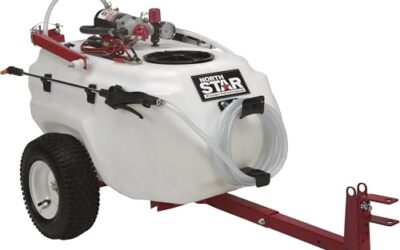
| NorthStar 31-Gallon Tow-Behind Boom/Spot Sprayer | Towing behind a mower across open acreage | 31-gallon tank, 2.2 GPM pump |
| PetraTools HD5000 Powered Sprayer with Cart | Walking large lots without carrying the weight | 6.5-gallon tank, 100 ft hose |
| Master Manufacturing 15 Gallon ATV Broadcast and Spot Sprayer | ATV and UTV work over rough ground | 15-gallon tank, 7 ft broadcast swath |
| Field King Professional 190328 Backpack Sprayer | Slopes and fence lines vehicles cannot reach | 4-gallon tank, up to 150 PSI |
| SOLO 425-Deluxe Piston Backpack Sprayer | Long walking routes with steady manual pressure | 4-gallon tank, up to 90 psi |
How to Choose
Match the Transport Method to Your Ground
Open, flat acreage rewards a tow-behind sprayer, because the mower does the carrying and a boom lays down a wide, even band in each pass. Rolling carts suit paved edges, orchards, and big gardens where you walk but do not want gallons of liquid on your shoulders. ATV-mounted tanks handle rough pasture and rutted tracks that would shake a trailer apart. Backpacks remain the fallback for slopes, terraces, and tight fence lines, trading capacity for access. Start with the ground, and the shortlist usually shrinks to one category immediately.
Tank Capacity and Refill Distance
Capacity decides how often you walk back to a water source, and on large properties that walk is the hidden cost of a small tank. A 31-gallon tow-behind can treat long runs between fills, while a 15-gallon ATV tank balances volume against the weight a rack can carry safely. Backpack tanks cluster around four gallons because that is roughly what most people can carry for an extended route. Think in round trips: measure the distance from your fill point to the farthest corner, then pick a tank that finishes the route without a mid-job return.
Pump Output, Pressure, and Swath Width
Gallons per minute tells you how fast a boom can lay product down while moving, while pressure shapes droplet size and reach from a hand wand. The NorthStar below pairs a 2.2 GPM pump with 70 PSI for boom and spot work, whereas the Field King backpack reaches up to 150 PSI for pushing spray higher into shrubs and tree lines. Broadcast width matters just as much: a seven-foot swath halves your passes compared with a narrow wand fan. Match output to your travel speed, or you will either starve the boom or drown the first rows.
Hose Length, Wand Reach, and Nozzle Choice
A long hose lets the tank stay parked while you work outward, which is why the PetraTools cart model ships with a 100 ft commercial hose and a second hose in the box. That reach suits driveways, building perimeters, and garden blocks where rolling the tank everywhere is awkward. Backpack buyers should check wand length and whether the pump handle can swap sides, since a full day of pumping with your weaker arm gets old quickly. Nozzle sets matter too: fan tips for flat lawn bands, cone tips for shrubs, and a stream setting for distant spot work.
The 5 Best Options
NorthStar 31-Gallon Tow-Behind Boom/Spot Sprayer
Anyone towing a mower or garden tractor across several open acres gets the most ground covered per fill from this 31-gallon trailer sprayer. The boom handles the wide, repetitive passes across pasture or lawn, while the spot wand covers gate corners, fence posts, and patches the boom cannot reach without turning the whole rig around. Its 2.2 GPM on-demand pump and 70 PSI rating suit steady boom output at towing speed, and the spring-loaded breakaway boom is designed to flex rather than snap when it clips a post or stump.
Specs
- Tank capacity: 31 gallons
- Pump: 2.2 GPM, NSQ Series on-demand
- Power: 12V DC
- Maximum pressure: 70 PSI
- Boom: spring-loaded breakaway design
- Model: 282785
Best for: Acreage owners towing behind a mower for boom passes plus spot touch-ups
Watch out for: Confirm your mower or tractor has a 12V battery connection and a hitch suited to a loaded trailer before ordering
ASIN: B00Y0SUC5Q
PetraTools HD5000 Powered Sprayer with Cart
This battery powered unit answers a common problem: four or more gallons is heavy on your back, yet a trailer is overkill for a large garden or suburban lot. The 6.5-gallon tank rides on a custom fitted cart, and it can also be carried as a backpack for short stretches. A 100 ft commercial hose lets you park the cart at a path or driveway and walk the spray out to beds, borders, and building edges, and a second hose is included in the box for a different working setup.
Specs
- Tank capacity: 6.5 gallons
- Model: HD5000
- Hose: 100 ft commercial hose, 2 hoses included
- Configuration: powered backpack sprayer with custom fitted cart
- Use style: cart or backpack carry
Best for: Large lots and gardens where you walk the route but refuse to carry the full tank
Watch out for: Plan where the cart will park on each stretch, because your working radius is set by that long hose
ASIN: B07W6KS4RJ
Master Manufacturing 15 Gallon ATV Broadcast and Spot Sprayer

Riders covering pasture, food plots, or long rural driveways on an ATV or UTV get a proper broadcast option here rather than a wand-only tank. The listing names a seven-foot broadcast swath, so each pass treats a real band of ground instead of a narrow line, and the Everflo pump delivers 2.2 GPM for that wider output. Spot spraying remains available for thistle patches and fence corners once the broadcast passes are done. At 15 gallons, the tank stays within what a rear rack can reasonably carry over uneven ground.
Specs
- Tank capacity: 15 gallons
- Model: SAO-11-015A-MM
- Pump: Everflo, 2.2 GPM
- Broadcast swath: 7 ft
- Functions: broadcast and spot spraying
- Mounting: ATV and UTV use
Best for: ATV and UTV owners treating pasture, plots, and rough ground in wide passes
Watch out for: Check your rack dimensions and load rating against a full 15-gallon tank before mounting it
ASIN: B07BD8D325
Field King Professional 190328 Backpack Sprayer
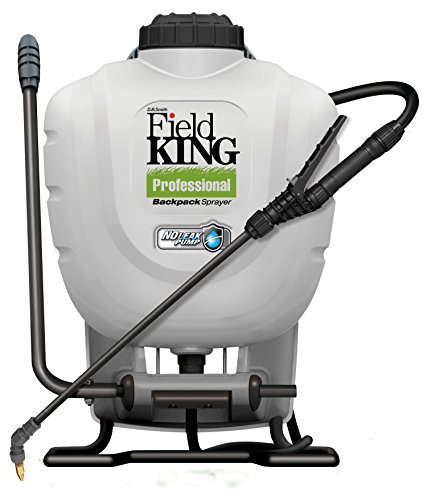
Where vehicles cannot go, a backpack still has to deliver professional output, and this Field King is built around an internal no-leak pump design rated up to 150 PSI. That pressure helps push spray into tall weeds, brush edges, and lower tree canopies along fence lines and ditch banks. The four-gallon tank keeps the carried load manageable on slopes, and the listing highlights Viton-sealed components, which matter when the sprayer spends its life carrying weed control mixes rather than plain water. It suits methodical walking routes rather than fast open-field passes.
Specs
- Tank capacity: 4 gallons
- Model: 190328
- Pump: internal no-leak pump design
- Maximum pressure: up to 150 PSI
- Seals: Viton-sealed components
Best for: Slopes, fence lines, and brush edges where only a carried sprayer can reach
Watch out for: Four gallons of liquid is a serious load on steep ground, so plan routes with a refill point partway round
ASIN: B000AYHKUO
SOLO 425-Deluxe Piston Backpack Sprayer
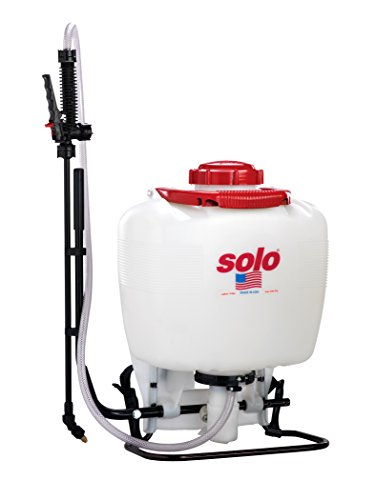
Gardeners and smallholders who prefer simple manual equipment get a long-established design in the 425-Deluxe, a four-gallon piston backpack sprayer rated up to 90 psi. Piston pumps hold pressure well for spot and band work along vegetable rows, orchard lines, and perimeter beds, and the deluxe padded straps spread the load during longer sessions. There is no battery to charge and no vehicle battery to borrow, so the sprayer is ready whenever a patch of weeds appears. It covers ground more slowly than the powered options above, but asks very little in return.
Specs
- Tank capacity: 4 gallons
- Model: 425-Deluxe
- Pump type: piston
- Maximum pressure: up to 90 psi
- Straps: deluxe padded straps
Best for: Walking routes around gardens, orchards, and smallholdings with no power source nearby
Watch out for: Manual pumping means pressure dips between strokes, so work at a pace you can sustain evenly
ASIN: B0000AX5RC
Which One Fits Your Situation
You Tow a Mower Across Several Open Acres
Choose the NorthStar 31-gallon tow-behind. Its boom turns spraying into a driving job, the tank stretches the distance between refills, and the spot wand handles the corners and gate posts a boom pass misses. Nothing else in this guide covers open, flat ground as quickly, provided your mower has the hitch and battery connection the sprayer needs to run its pump.
Your Lot Is Large but Broken Into Beds and Paths
Pick the PetraTools HD5000 cart sprayer. The tank rolls instead of riding on your shoulders, and the 100 ft hose reaches across beds, patios, and building edges while the cart waits on firm ground. It fits properties that are big in total area but awkward in shape, where a trailer cannot turn and a backpack would mean constant refills.
You Spray Pasture and Plots From an ATV
Go with the Master Manufacturing 15-gallon broadcast sprayer. The seven-foot swath makes each riding pass count, the Everflo pump keeps up with that width, and spot mode tidies the patches the broadcast band passes over. Check the rack fit first, then let the machine do the travelling across ground that would punish a wheeled trailer.
Your Spraying Happens on Slopes and Fence Lines
Take one of the backpacks: the Field King 190328 when you want its higher pressure ceiling and no-leak pump design for brush and tall weeds, or the SOLO 425-Deluxe when you prefer straightforward manual piston operation with padded straps. Both hold four gallons, keeping the load realistic where footing, not distance, is the limiting factor.
Common Mistakes
- Buying by tank size alone, then discovering the sprayer cannot reach half the property because the hose, boom, or terrain was never considered.
- Mixing a full large tank at one strength and spraying at different speeds, which leaves some passes over-treated and others barely touched.
- Choosing a tow-behind for ground full of gates, trees, and tight turns, where a cart or backpack would finish sooner with less reversing.
- Ignoring seal and hose compatibility with the products you spray, then blaming the pump when weed control mixes degrade the fittings.
- Filling a backpack to the brim for a steep route, instead of carrying less and refilling from a container placed partway along the line.
Frequently Asked Questions
How large a tank do I need for an acre of spraying?
Work backwards from your route rather than the acreage alone. Open ground treated from a mower suits a tank in the 25 to 31 gallon range, ATV work often settles near 15 gallons, and walking routes stay near four gallons for carrying comfort. What matters is finishing a logical section, a field, a fence line, a garden block, on one fill, so your mix stays consistent from start to end.
Is a boom sprayer always faster than a wand?
On open, unobstructed ground, yes, because the boom treats a full band with every pass and keeps application even at a steady driving speed. Around buildings, trees, gates, and garden furniture, that advantage disappears quickly, and a wand on a long hose often finishes sooner. Many large properties end up using both: boom passes for the field, wand work for everything the field touches.
Can one sprayer handle both lawn products and weed control?
Physically, most of these sprayers can carry either, but residue is the catch. Herbicide left in a tank, hose, or nozzle set can damage the lawn or plants you treat next. Careful owners rinse the whole system thoroughly between product types, and many keep a backpack reserved for weed control while the big tank handles feeding and general treatments across the main ground.
What should I check before the first full-property spray?
Fill the tank with plain water and spray a measured stretch of driveway or bare ground. Confirm the swath width, look for drips at every fitting, check that pressure holds at your working pace, and note how far one tank actually takes you. That single rehearsal reveals leaks, clogged tips, and unrealistic capacity guesses while the only thing being wasted is water.