Key takeaways
- Compare electric vs manual nasal aspirators for babies, covering suction control, cleaning, noise, and comfort to clear congestion gently and safely.
A congested baby often struggles to feed and sleep, since young infants breathe mainly through the nose. A nasal aspirator helps clear mucus so breathing, feeding, and rest come easier, especially during colds and dry indoor seasons. The category splits into two broad approaches. Manual aspirators use parent-controlled suction through a tube or a squeeze bulb, giving direct control over strength. Electric aspirators use a small motor for steady suction at the press of a button, reducing effort during repeated use. Neither approach is automatically better: control, cleaning, noise, and a baby’s tolerance all shape the right choice. This guide compares five options across both types honestly, including where each design shines and where it asks for patience or extra care.
As an Amazon Associate, we earn from qualifying purchases.
Quick answer
Manual aspirators such as the NoseFrida give the most direct suction control and quiet operation, which suits newborns and light congestion. Electric models such as the GROWNSY and Electric NoseFrida Pro provide steady, repeatable suction with less effort, which helps during heavier congestion or frequent use. Many families keep one of each type for different situations.
Frida Baby NoseFrida the SnotSucker

The NoseFrida is the best-known manual oral aspirator. A soft tube tip rests at the opening of the nostril to form a seal, while the parent draws suction through a longer tube. A disposable hygiene filter sits in the path to block mucus transfer, and suction strength follows the parent’s own effort, allowing very gentle starts and pauses. The parts separate for washing, and the design contains no bulb interior where moisture can hide.
This manual approach suits newborns, light to moderate congestion, and parents who want quiet, fully controlled suction without batteries or charging. Saline drops or spray used a few minutes beforehand help loosen mucus so less suction is needed. The trade-offs are honest ones: some parents dislike the oral suction concept despite the filter, technique takes a little practice, and filters are an ongoing replacement item. For control and simplicity, however, this remains the reference manual design.
NeilMed Naspira Nasal-Oral Aspirator

The NeilMed Naspira works in two ways: as an oral suction aspirator and as a classic squeeze bulb. In oral mode, a one-way valve is designed to prevent air from flowing back toward the baby, and in-line filters add a barrier. In bulb mode, the transparent silicone bulb can be opened for thorough cleaning and inspection, addressing the common concern that closed bulbs hide residue. The soft tip aims for a gentle seal at the nostril.
This two-in-one manual design suits families who want options in a single tool and who value being able to open and inspect every part. The Naspira in this listing comes as a pack of two, which keeps a clean spare ready during illness. Learning both modes takes a short adjustment, and filter replacement remains part of oral mode upkeep. Parents who prefer the familiarity of a bulb but want better cleaning access often find this design a sensible middle ground between a basic bulb and a full oral tube system.
Frida Baby Electric NoseFrida Pro
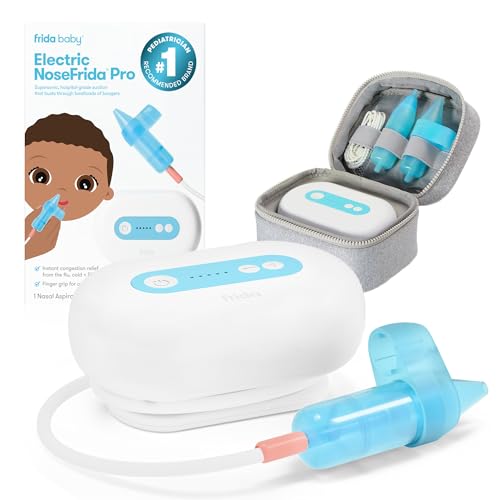
The Electric NoseFrida Pro moves the familiar Frida approach to motorized suction with five suction levels, two silicone tip sizes, and a cordless body supplied with a storage case. Steady motor suction can help when mucus is thick or when congestion returns often through a long cold, since each use feels consistent without depending on parent technique. The case keeps tips and the device together in a diaper bag or medicine cabinet.
This electric option suits toddlers and babies who need repeated clearing and parents who prefer button control over oral suction. Noise is the honest consideration: motor sound can startle some babies, so starting on the lowest level and keeping sessions brief helps. Charging or battery readiness also becomes part of the routine, unlike manual tools that are always ready. Cleaning follows the maker’s directions for the collection parts and tips, and checking tip fit for the child’s age keeps the seal gentle and effective.
GROWNSY Electric Nasal Aspirator
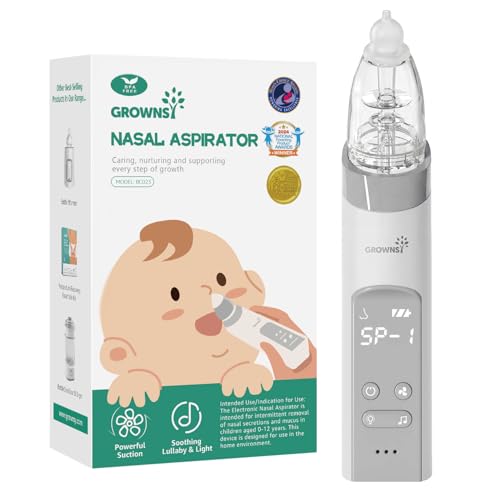
The GROWNSY electric aspirator offers three adjustable suction levels, three silicone tip shapes, and soothing features that include music and light. The larger suction chamber is designed to handle a full clearing session without mid-session emptying, and the tips cover different nostril sizes and mucus positions. Suction starts with a button press, which can help when one hand is gently steadying the baby.
This model suits families who want an electric aspirator with distraction features for wiggly toddlers, since light and sound can hold attention for the few seconds suction takes. The extra features add size compared with basic electric models, and the chamber and tips need careful washing and full drying after each use to stay hygienic. As with all electrics, the lowest effective level is the right default, increasing only when mucus does not move. Parents who want the simplest possible electric tool may prefer a no-frills design, while parents of resistant toddlers often value the soothing extras most.
Braun Nasal Aspirator 1, BNA100

The Braun Nasal Aspirator 1 is a compact battery-operated electric aspirator with two suction levels and two silicone tip sizes for infants and older children. Operation uses simple buttons, and suction stops when the button is released, giving a clear sense of control during use. The collection cup and tips are designed to be rinsed and are described as dishwasher safe on suitable cycles, which simplifies cleanup during frequent illness days.
This option suits parents who want a straightforward electric aspirator from a health-device brand without music, lights, or app features. Battery operation means keeping spare batteries available during cold season, since a flat device at bedtime helps no one. Suction is gentle by design, so very thick mucus may still need saline softening and patience rather than repeated long sessions. For households that value simple controls, easy rinsing, and age-based tips in one compact unit, the Braun design is a calm and practical electric choice.
How to choose
Start with suction control. Manual oral aspirators give continuous, parent-adjusted control and silent operation, which many families prefer for newborns and mild congestion. Electric aspirators give consistent suction with less technique, which helps when congestion is heavy, sessions are frequent, or oral suction is not acceptable to the caregiver. Bulb designs sit between the two: familiar and inexpensive in style, but only openable bulbs allow full cleaning confidence.
Cleaning should weigh heavily. Look for parts that separate fully, tolerate washing as directed, and dry completely before storage. Filters in manual oral systems need regular replacement, so factor in availability. Tip softness and sizing matter for comfort: soft silicone tips in more than one size help form a seal at the nostril opening without insertion. Noise and distraction features matter for toddlers, while compact size and cases matter for travel and daycare bags. In every case, saline softening before suction, gentle technique, and limited session length protect delicate nasal tissue better than stronger suction. Following pediatric guidance on frequency and stopping when mucus runs clear keeps any type safe and effective.
Who should skip
Some situations call for medical advice rather than a new aspirator. Babies under three months with congestion and fever, babies with breathing difficulty, poor feeding, dehydration signs, or congestion that does not improve should be seen by a clinician promptly. Parents uncomfortable with oral suction should skip manual oral models and choose an electric or openable bulb design instead. Families whose baby becomes highly distressed by motor noise may do better with a quiet manual tool. Anyone unwilling to wash and fully dry parts after each use should reconsider the category, since hygiene is central to safe use. A basic saline routine alone may also be enough for very mild, short-lived stuffiness.
FAQ
Is electric suction stronger than manual suction?
Not always in a useful way. Electric models provide steady suction at set levels, while manual oral models can match or exceed that strength depending on parent effort, with finer moment-to-moment control. Effective clearing depends more on saline softening, a good tip seal, and brief sessions than on maximum suction, and the gentlest effective level is the safest choice.
How often can a nasal aspirator be used in a day?
Guidance varies, but common pediatric advice limits suction to a few times daily, typically before feeds and sleep, to avoid irritating nasal tissue. Using saline first reduces the need for repeated attempts. If congestion requires constant suction or the nose becomes sore or bleeds, pausing use and seeking clinician advice is the right step.
How should aspirator parts be cleaned between uses?
Parts that contact mucus should be washed promptly with warm soapy water as the maker directs, rinsed well, and air dried fully before reassembly and storage. Filters in oral systems should be replaced as directed, and electric collection chambers should be emptied each session. Never sharing aspirators between children without full cleaning also reduces germ transfer during illness season.
When should congestion be checked by a doctor?
Prompt medical review is important for babies under three months with fever, any baby with labored breathing, flaring nostrils, poor feeding, fewer wet diapers, unusual sleepiness, or symptoms that worsen or linger beyond a typical cold. An aspirator manages mucus at home but does not treat infection, allergy, or breathing conditions that need clinical assessment.
Final verdict
Manual and electric aspirators solve the same problem with different strengths. The NoseFrida leads manual options for control and quiet use, the NeilMed Naspira adds an openable bulb mode for cleaning confidence, the Electric NoseFrida Pro and GROWNSY bring steady motor suction for heavier or frequent congestion, and the Braun BNA100 keeps electric use simple and easy to rinse. Many households end up keeping a manual tool for gentle newborn care and an electric tool for toddler colds, which covers both control and convenience without relying on a single design.