Key takeaways
- Use this nursery air purifier buying guide for cleaner baby rooms, covering HEPA filters, room size, noise, safety, and filter care for daily use.
Nursery air carries dust, pollen tracked in on clothing, pet dander in pet homes, and everyday odors from diapers and laundry. An air purifier cannot replace ventilation, cleaning, and smoke-free living, but a well-chosen unit with true HEPA filtration can reduce airborne particles in the room where a baby sleeps and plays for many hours each day. Nursery buying differs from general buying in three ways: noise matters because the unit runs during sleep, safety matters because controls and cords sit near curious toddlers, and honest room sizing matters because undersized units disappoint. This guide compares five established models suited to small and medium rooms, explains the specifications that actually decide performance, and flags the features to avoid around infants, including ozone-producing technologies.
As an Amazon Associate, we earn from qualifying purchases.
Quick answer
For most nurseries, a compact true HEPA purifier sized honestly for the room, with a quiet sleep mode and simple controls, is the right pattern. The LEVOIT Core 300 fits small nurseries well, the Core 300S-P adds smart auto operation, and the Blueair and Winix options suit families wanting auto sensing or stronger odor handling in larger rooms.
LEVOIT Core 300 Air Purifier, Core300-P

The LEVOIT Core 300 is a compact tower purifier built around a three-stage system: a pre-filter for large dust, a true HEPA filter for fine particles, and an activated carbon layer for everyday odors. It is sized for small to medium rooms and includes a sleep mode intended to keep sound low during night hours, plus a display-off option so light does not disturb sleep. The simple control panel avoids app dependence, which many parents appreciate during night adjustments.
This base model suits small nurseries where the job is steady particle reduction without extra features. Filter replacement follows a single combined cartridge pattern, keeping maintenance simple: vacuum the pre-filter area as directed and replace the cartridge on the maker’s schedule or when performance drops. Placement matters more than raw power at this size, so keeping the unit on the floor with clear space around the intake, away from the crib and out of cord reach, gives the most consistent result through the night.
LEVOIT Core 300S-P Smart Air Purifier
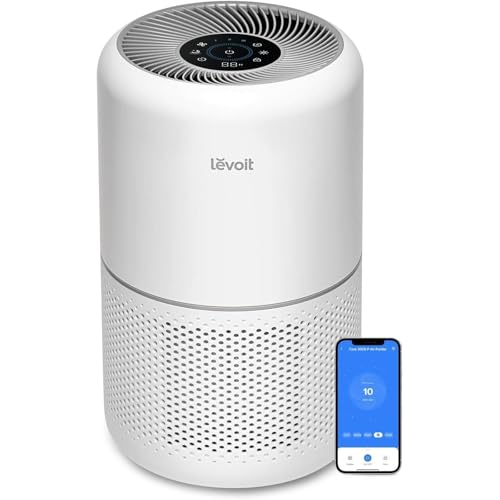
The Core 300S-P builds on the Core 300 pattern with smart connectivity, auto mode, and air quality sensing through the VeSync app and voice assistant support. In auto mode, the fan adjusts to sensed particle levels, running higher after dust-raising activity such as changing bedding and dropping to quiet levels as air clears. Sleep mode and scheduled operation support overnight use, and filter status tracking in the app helps families stay on schedule.
This smart version suits parents who want the purifier to manage itself and who value checking room status from another room. The same nursery cautions apply: Wi-Fi features should never replace checking placement and filter condition in person, and display light settings should be set for sleep. Filtration remains the familiar three-stage HEPA and carbon approach, so the upgrade is about control and sensing rather than a different cleaning method. Households avoiding connected devices in the nursery may still prefer the manual base model for its simplicity.
Winix 5500-2 Air Purifier

The Winix 5500-2 is a larger-room purifier with true HEPA filtration, a washable carbon pre-filter for odors, auto mode with an air quality indicator, and a sleep mode. Its PlasmaWave feature can be switched off, and nursery use should keep that feature off, since the nursery priority is mechanical HEPA filtration without added air treatment technologies. Sized for medium to larger rooms, this unit covers open-plan nursery and bedroom combinations better than compact towers.
This model suits families placing one purifier to serve a larger shared sleep space or a nursery in a pet home where odor control matters. The washable pre-filter reduces some ongoing upkeep, while the main HEPA and carbon set still needs scheduled replacement. The footprint and weight exceed the compact options, so measuring floor space before buying is wise. With PlasmaWave off, sleep mode on at night, and controls placed out of toddler reach, the Winix offers strong capacity headroom that smaller units cannot match for bigger rooms.
Blueair Blue Pure 411 Air Purifier

The Blueair Blue Pure 411 is a small-room purifier using HEPASilent technology, which combines electrostatic and mechanical filtration to move air quietly with low energy use. A washable fabric pre-filter wraps the lower body, trapping large dust and extending main filter life, and the pre-filter comes in different colors to suit room decor. One-button control keeps operation extremely simple, with speed settings that include a quiet low level for sleep hours.
This option suits small nurseries and parents who rank quiet operation and design simplicity highly. Because HEPASilent uses an electrostatic stage as part of normal operation, families who want purely mechanical HEPA filtration only should consider that distinction carefully and may prefer a true HEPA model instead. Filter changes are straightforward, and the fabric pre-filter can be vacuumed or washed as directed. For a compact room where noise sensitivity is high and controls need to stay minimal, the 411 pattern remains appealing despite that technology note.
Blueair Blue Pure 411i Max Air Purifier
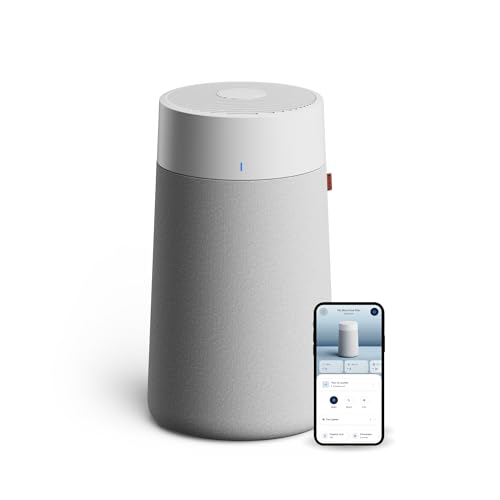
The Blue Pure 411i Max updates the 411 concept with smart features, auto mode, and higher cleaning speed for small rooms. It cleans a typical nursery-sized room quickly on high and settles to quiet filtration for ongoing use, with app control and air quality feedback for caregivers who want visibility. HEPASilent filtration again pairs electrostatic and mechanical stages, and washable pre-filters in fabric finishes keep the design nursery-friendly in appearance.
This model suits parents who want Blueair quietness plus sensing and scheduling, for example running a stronger clean before bedtime and a quiet auto pattern overnight. As with the standard 411, families seeking mechanical-only filtration should weigh the electrostatic stage in the decision. Energy use stays low for continuous running, which matters because nursery purifiers work best when left on rather than switched on only during symptoms. Placing the unit away from walls and soft furnishings as directed preserves airflow and keeps the sensors reading room air rather than a corner pocket.
How to choose
Begin with honest room sizing. Purifier coverage claims often assume high fan speeds and frequent air changes, so compare clean air delivery ratings and choose a unit that can handle the nursery at a quiet or medium speed, not only at maximum. A purifier that only keeps up on loud high settings will be turned down or off at night, losing the benefit. True HEPA filtration is the nursery baseline for particle capture, including dust, pollen, and dander. Activated carbon adds odor handling for diaper pails and pet homes, though carbon saturates and needs timely replacement.
Next, check noise and light. A dedicated sleep mode, low decibel operation on low speed, and a display that can dim or turn off protect sleep for light-sensitive babies. Safety checks are equally important: avoid purifiers that generate ozone, treat ionizer or plasma features with caution and keep them off in the nursery unless a pediatric source supports use, and place cords and units out of reach with stable footing that resists tipping. Filter cost and change intervals decide long-term practicality, since an overdue filter quietly reduces performance. Finally, remember what a purifier cannot do: source control, dusting with a damp cloth, washing bedding, and keeping the home smoke-free remain the foundation, with filtration as support.
Who should skip
Families should skip a nursery purifier if the main concern is a medical condition such as asthma or serious allergy that needs a clinician-led plan first, since a consumer purifier is not a medical device. Households unwilling to replace filters on schedule will get declining value and may do better spending on cleaning basics and ventilation. Very small, well-ventilated nurseries in low-pollen seasons may show little noticeable difference, making the purchase optional. Parents who want mechanical-only filtration should skip electrostatic hybrid models. Anyone expecting a purifier to remove the need for dust control, pet management, or addressing damp and mold at the source should address those causes directly instead of relying on a device.
FAQ
Should a nursery air purifier run all night?
Continuous running on a quiet sleep or auto setting is the common pattern, because particles enter the room whenever doors open and bedding moves. Running the unit steadily at a low, quiet speed generally maintains cleaner air better than short bursts on high. Following maker guidance on placement and keeping the intake unblocked supports safe overnight operation.
Are ionizers or ozone features safe in a nursery?
Nursery buying should favor plain mechanical HEPA filtration. Ozone-generating features should be avoided around babies, and ionizer or plasma features should stay off unless current pediatric and regulatory guidance supports them for infant rooms. Models that allow such features to be disabled, or that omit them entirely, give caregivers the clearest safety position.
How often do nursery purifier filters need changing?
Intervals vary by model, room dust levels, and hours of daily use, commonly falling in the range of several months to about a year for main HEPA cartridges. Pre-filters need more frequent cleaning, often monthly vacuuming or washing as directed. Change indicators help, but marking the install date and checking the filter visually prevents running long past effective life.
Where should a purifier be placed in the nursery?
Place the unit on a flat floor surface with clear space around the intake and outlet as the maker directs, away from the crib so air does not blow directly on the baby and cords stay out of reach. Corners blocked by furniture reduce performance, and placing the unit near the door can help it treat air entering from the rest of the home.
Final verdict
The strongest nursery choice pairs honest sizing with quiet, continuous HEPA filtration and simple, safe operation. The LEVOIT Core 300 covers small nurseries with minimal fuss, the Core 300S-P adds sensing and auto control, the Winix 5500-2 serves larger shared rooms with its extra feature switched off, and the Blueair 411 models prioritize quiet running with a technology distinction families should weigh. Chosen carefully, placed well, and maintained on schedule, a nursery purifier becomes quiet background support for cleaner air through naps, nights, and play.