Key takeaways
- Five kids sleeping bags for camping trips, backyard campouts, and sleepovers, from warm mummy bags to lightweight picks kids can carry themselves.
Table of Contents
- The Short Answer
- Five Kids Sleeping Bags at a Glance
- How to Choose a Kids Sleeping Bag
- Coleman Kids 50 Sleeping Bag
- MalloMe Sleeping Bag
- REDCAMP Kids Mummy Ultra Lightweight Sleeping Bag
- TETON Sports Celsius Junior Sleeping Bag
- Coleman Kids 30-Degree Mummy Sleeping Bag
- Kids Sleeping Bags Compared Side by Side
- Packing and Care Tips for Kids Sleeping Bags
- Frequently Asked Questions
- Conclusion
- Product and ASIN Reference
The Short Answer
The best kids sleeping bag for most families is the Coleman Kids 50 Sleeping Bag, because it fits children up to 5 feet tall, carries a 50-degree temperature rating that suits summer camping and indoor sleepovers, and includes a stuff sack and a glow-in-the-dark design that helps kids find their own bag after dark. If your child camps in cooler weather, the TETON Sports Celsius Junior Sleeping Bag is the warmer pick, with a 20-degree rating and a roomy cut that still fits a child comfortably. For backpacking trips and hikes where every ounce matters, the REDCAMP Kids Mummy Ultra Lightweight Sleeping Bag weighs about 1.3 pounds and packs into a small compression sack. The MalloMe Sleeping Bag suits older kids and growing families because one bag fits both children and adults, and the Coleman Kids 30-Degree Mummy Sleeping Bag gives cold sleepers a snug mummy shape for spring and fall nights. Each bag below works for camping, backyard campouts, scouts, and sleepovers, and each one is machine washable or easy to wipe clean, so muddy feet and spilled snacks are part of the adventure rather than the end of it.
As an Amazon Associate, we earn from qualifying purchases.
Choosing a sleeping bag for a child is different from choosing one for an adult. A bag that is too long leaves cold air pooling around small feet, a bag that is too warm turns a summer night into a sweaty wrestling match with a zipper, and a bag that is too heavy ends up carried by a parent before the trailhead is even in sight. Kids also care about things adults forget: whether the zipper snags, whether the inside feels scratchy, whether the bag looks fun enough to brag about, and whether they can stuff it back into its sack without a grown-up doing the job for them. The five bags in this guide were picked to cover the situations families actually face. There is a warm-weather bag for summer camp, a cold-weather bag for mountain mornings, a featherweight bag for hiking, a roomy bag that grows with the family, and a mummy bag for kids who sleep cold. Every bag is sized for children rather than scaled down from an adult pattern as an afterthought, and every bag uses a zipper a child can work alone.
Before you buy, measure your child standing up and add a few inches for wiggle room, then check the bag length against that number. A bag that ends right at the top of the head with no room to spare will feel tight within a season, while a bag that is a foot too long will feel drafty and cold. Think about the coldest night your child is likely to sleep in, not the average night, because a bag rated for 50 degrees will not keep a child warm when the temperature drops into the 40s. Finally, let your child help choose the color or pattern when there is a choice, because a bag a child loves is a bag a child will actually sleep in rather than kick off at midnight.
Five Kids Sleeping Bags at a Glance
| Bag | Best For | Temperature Rating | Shape |
|---|---|---|---|
| Coleman Kids 50 Sleeping Bag | Summer camp and sleepovers | 50 degrees | Rectangular |
| MalloMe Sleeping Bag | Older kids and family sharing | 50 to 80 degrees | Rectangular |
| REDCAMP Kids Mummy Ultra Lightweight Sleeping Bag | Hiking and backpacking | 50 to 77 degrees | Mummy |
| TETON Sports Celsius Junior Sleeping Bag | Cold nights and mountain camping | 20 degrees | Rectangular |
| Coleman Kids 30-Degree Mummy Sleeping Bag | Cold sleepers and spring and fall trips | 30 degrees | Mummy |
The table above gives the fastest way to sort the five bags, and the sections below explain the trade-offs behind each row. Warmth ratings are the single most useful number on a sleeping bag label, but they are not the whole story. A rectangular bag gives a child room to roll over and spread out, which restless sleepers love, while a mummy bag hugs the body and keeps warm air close, which cold sleepers love. A lightweight bag makes a hiking trip possible, while a heavier bag with thicker fill makes a chilly cabin night comfortable. The right bag is the one that matches your child, your climate, and your plans, not the one with the lowest rating or the lightest weight on paper.
How to Choose a Kids Sleeping Bag
Start with the temperature rating
The temperature rating tells you the coldest night a bag is built to handle, and it is the first number to check. A 50-degree bag suits summer nights, warm cabins, and indoor sleepovers. A 30-degree bag suits spring and fall camping, when evenings turn cool after sunset. A 20-degree bag suits mountain trips and late-season camping, when morning frost is a real possibility. As a rule, pick a bag rated a little colder than the coldest night you expect, because children lose heat faster than adults and because a bag that is slightly too warm can be unzipped and used as a blanket, while a bag that is too cold cannot be made warmer at midnight. If your child sleeps warm at home and kicks off blankets, lean toward the lighter rating. If your child sleeps cold and burrows under covers, lean toward the warmer rating. Layering helps too: a child in warm sleep clothes inside a 50-degree bag will sleep warmer than a child in a thin shirt inside the same bag.
Match the length to your child
Kids sleeping bags are usually built for children up to about 5 feet tall, and most of the bags in this guide measure about 66 inches long. Measure your child from head to toe, then look for a bag that is a few inches longer than that measurement. A bag that fits today with a few inches to spare will last a season or two of growth, which matters when you are buying gear for a growing child. A bag that is much too long, on the other hand, leaves empty space at the foot that the child must warm with body heat, and that space turns into a cold pocket on a chilly night. Some families solve this by tucking a small pillow or a rolled fleece blanket into the foot of an oversized bag, which fills the dead space and gives cold feet something warm to rest against. If you are buying for a younger child who is well under 5 feet tall, a shorter mummy bag may fit better than a full-length rectangular bag, because the tapered foot keeps warm air close to small feet.
Rectangular or mummy: pick the shape that fits how your child sleeps
Rectangular bags are the classic kids sleeping bag shape. They are roomy, they unzip fully into a flat blanket for warm nights or campfire sitting, and two of them can often be zipped together for siblings who want to share. Restless sleepers who turn over all night do best in a rectangular bag, because the extra width lets them move without fighting the fabric. Mummy bags taper from the shoulders to the feet and wrap the body closely, which traps warm air and cuts weight. They suit cold sleepers and hiking trips, where warmth and pack size matter more than sprawling room. The trade-off is freedom of movement: a child who likes to starfish across the bed may feel squeezed in a mummy bag. If you are unsure which shape your child prefers, a rectangular bag is the safer first buy, because it doubles as a blanket and works for sleepovers as well as camping. If your child already camps and complains about cold feet, a mummy bag is the better next step.
Weight and pack size matter more than parents expect
A kids sleeping bag that weighs 3 pounds does not sound heavy until a 7-year-old has to carry it, plus a backpack, plus a water bottle, down a trail. For car camping, weight hardly matters at all, because the bag rides in the trunk and gets carried a few steps to the tent. For hiking, scouts, and walk-in campsites, weight matters a great deal, and pack size matters just as much. Look for a bag that comes with a stuff sack or a compression sack, and check the packed size before you buy. A bag that packs down small fits in a child-sized backpack and leaves room for snacks and a flashlight. A bag that packs large may need its own carry strap or a separate bag. Teach your child to stuff the bag rather than roll it, because stuffing is faster, easier, and kinder to the insulation than a tight roll, and a child who can pack their own bag is a child who feels ownership over the trip.
Zippers, linings, and washability
The zipper is the part of a sleeping bag that children touch most, and a snagging zipper can turn bedtime into a struggle. Look for a two-way zipper that opens from the top or the bottom, which lets a child vent warm air around the feet without unzipping the whole bag. A zipper guard, which is a strip of fabric that sits between the zipper teeth and the lining, keeps the inside fabric from catching. The lining matters too: a soft, smooth lining feels comfortable against bare arms and legs, while a scratchy lining will have a child climbing out of the bag within minutes. Polyester and cotton linings are common, and both wash well. Speaking of washing, check whether the bag is machine washable before you buy, because kids sleeping bags get dirty fast. Mud, grass, spilled drinks, and campfire smoke all end up on a kids bag, and a bag that can go through a gentle wash cycle and air dry will last far longer than a bag that needs hand washing after every trip. Always air dry a sleeping bag rather than using high heat, which can melt the fill and damage the shell.
Coleman Kids 50 Sleeping Bag

The Coleman Kids 50 Sleeping Bag is the classic first sleeping bag for a reason. It is built for summer nights, warm cabins, and living room sleepovers, and it does the simple things well: it fits children up to 5 feet tall, it keeps them comfortable when the night stays mild, and it looks fun enough that kids want to climb into it. The glow-in-the-dark design is the detail children remember most. After the lights go out, the pattern glows softly, which helps a nervous camper find their own bag in a dark tent and gives the whole sleepover a small sense of adventure. Parents remember the practical details instead: the bag is machine washable, it comes with a stuff sack, and the rectangular cut gives restless sleepers room to turn over without tangling the zipper.
A 50-degree rating makes this bag a warm-weather specialist. On a summer night at camp, when the air stays mild and the tent holds the warmth of the day, a 50-degree bag is exactly right. The child stays comfortable without overheating, and if the night turns warmer than expected, the bag unzips into a flat blanket for sleeping on top of it rather than inside it. In a cabin or a living room, the same rating works year-round, because indoor nights rarely drop below mild temperatures. Where the bag reaches its limit is a cool mountain evening or a late fall campout, when the temperature slides into the 40s. On those nights, a warmer bag is the better choice, and this bag is better saved for the next warm trip. That is not a flaw in the bag so much as a fact about what it was built to do, and families who camp mostly in summer will rarely notice the limit.
The fit is generous without being sloppy. At about 66 inches long and 26 inches wide, the bag gives a child room to stretch out, bend the knees, and roll from side to side. The rectangular shape also means the bag can be unzipped fully and used as a blanket around a campfire or on a picnic, which adds a second use that mummy bags cannot match. Two of these bags can be zipped together for siblings who want to share a sleeping space. That small detail matters more than it sounds, because a child who can pack their own gear feels like a real camper rather than luggage.
This bag suits first-time campers best, and it suits them very well. A child heading to a first scout camp, a first backyard campout, or a first sleepover at a friend’s house gets a bag that is easy to use, easy to wash, and fun to show off. It also suits families who need a spare bag for guests, because it works just as well on a living room floor as it does in a tent. It does not suit cold-weather camping, and it does not suit long hiking trips where weight is the top concern, but those are jobs for other bags in this guide. For summer camping and sleepovers, which is where most kids sleeping bags spend most of their lives, the Coleman Kids 50 is the straightforward pick, and its place at the top of this guide reflects how many families it serves rather than any single standout feature.
Specs
- Temperature rating: 50 degrees Fahrenheit
- Fits children up to: 5 feet tall
- Size: about 66 x 26 inches
- Shape: Rectangular
- Design: Glow-in-the-dark pattern
- Stuff sack: Included
- Care: Machine washable
- Best for: Summer camping, sleepovers, and first-time campers
- Value group: Budget
MalloMe Sleeping Bag

The MalloMe Sleeping Bag is the flexible pick in this guide, because it is not really a kids-only bag at all. It is a full-size rectangular bag that fits adults up to 6 feet tall and also works for older kids, which means one purchase can cover a growing child for years and can double as a spare adult bag on family trips. The Everyday 3 Season version carries a 50 to 80 degree comfort range, which suits spring, summer, and fall nights, and the waterproof outer shell shrugs off damp grass, tent condensation, and light rain at the tent door. A compression sack is included, and the bag packs down small enough to fit in a backpack or a car trunk without taking over the whole load.
The size is the first thing to notice. At about 86.6 x 31.5 inches, this bag is much longer and wider than a typical kids bag, and that roominess is both its strength and its trade-off. An older child who is close to adult height will appreciate the extra length, and a child who sprawls in sleep will love the width. A younger or smaller child, on the other hand, may find the bag too big, with empty space at the foot that stays cool on a chilly night. The fix is simple: tuck a fleece blanket or a small pillow into the foot of the bag to fill the dead space, or fold the bottom of the bag under to shorten it. Families who buy this bag for a younger child should plan on that trick, while families buying for a child of 10 or older can use the bag as it comes and expect it to last through the teenage years.
The shell is the second thing to notice. MalloMe calls it a HEX-TECH shell, and in plain terms it is a water-resistant polyester outer layer that keeps dew and spills from soaking into the fill. That matters on real camping trips, where bags end up on damp ground, near tent walls that collect condensation, and next to water bottles that leak in the night. The double-layer design adds warmth without adding much weight, and the two-way zipper lets a child open the bag from the bottom for ventilation around the feet while keeping the top closed. The hood opening adjusts with a drawstring, which lets the sleeper cinch the top close on a cool night or open it wide on a warm one. The bag also opens flat into a blanket, and two bags can be zipped together for a double sleeping space, which is useful when siblings share a tent.
Weight is about 3 pounds for the Everyday 3 Season version, which is reasonable for a bag of this size. It is light enough for car camping and short walk-in sites, and it packs into its compression sack for transport, though it is not the bag to choose for a long backpacking trip with a young child. The Plush Comfort version adds thicker fill for cooler nights and weighs more, so families should check which version they are buying and match it to their plans. The Everyday version suits most three-season camping, while the Plush version suits families who camp late into fall and want extra warmth without buying a separate cold-weather bag. Both versions share the same shell, zipper, and compression sack design, so the choice comes down to warmth and weight rather than features.
This bag suits older kids, growing families, and households that want one bag to serve more than one person. It is the right pick when the child is tall for their age, when the family camps in three seasons rather than one, and when a spare adult bag would be useful on the same trip. It is not the right pick for a small child who needs a snug kids-size fit, and it is not the lightest bag for hiking. Within those limits, it is one of the most useful bags in this guide, because it grows with the child and keeps working long after a kids-size bag would have been outgrown.
Specs
- Temperature rating: 50 to 80 degrees Fahrenheit, Everyday 3 Season version
- Size: about 86.6 x 31.5 inches
- Weight: about 3 pounds, Everyday 3 Season version
- Shape: Rectangular
- Shell: Water-resistant polyester outer layer
- Stuff sack: Compression sack included
- Closure: Two-way zipper with adjustable hood
- Care: Machine washable, air dry
- Best for: Older kids, family sharing, and three-season camping
- Value group: Mid-range
REDCAMP Kids Mummy Ultra Lightweight Sleeping Bag

The REDCAMP Kids Mummy Ultra Lightweight Sleeping Bag is the hiking pick in this guide, and its headline number explains why: it weighs about 1.3 pounds. For a child carrying their own gear on a trail, that weight makes the difference between a bag that rides comfortably in a small backpack and a bag that ends up in a parent’s pack before the first mile is done. The mummy shape tapers from the shoulders to the feet, which keeps warm air close to the body and cuts the fabric and fill needed to build the bag. The result is a bag that packs into a small compression sack, fits in a child-sized backpack, and still keeps a child comfortable on mild nights from 50 to 77 degrees.
The fit is built for kids under 4.6 feet tall, with a sleeping space of about 66.8 x 26 inches. That size suits younger and smaller children best, and it is the snuggest fit in this guide. The tapered foot is the key detail: instead of a wide rectangular foot that leaves cold air around small feet, the mummy foot wraps closely and stays warm. A hood with a drawstring cinches around the head on cool nights, and the bag can be opened from the bottom zipper to vent warm air around the feet on warmer nights. The two-way zipper runs along the side, and a fabric guard keeps the lining from catching in the teeth, which matters when a tired child is trying to get out of the bag in the dark. The bag comes in blue and pink, with a rose red option as well, so children can pick a color they like and parents can tell siblings’ bags apart.
The shell is a water-resistant 190T terylene outer layer, which is a tightly woven polyester that sheds light rain and spills. Inside, a shaped cotton fill provides loft and warmth without the weight of a heavy synthetic blanket. The combination is built for mild climates and three-season use: spring, summer, and fall nights when the temperature stays above 50 degrees. On a warm summer night, the bag can be unzipped partway and used as a light cover. On a cool spring evening, the hood and the snug mummy shape keep warmth in. The bag is not built for cold nights below 50 degrees, and families who camp in the mountains or late in fall should pair it with warmer layers or choose a warmer bag from this guide. Within its range, though, it is comfortable and practical, and the low weight means it gets used on trips where a heavier bag would stay home.
Packing is where this bag earns its place. The included compression sack shrinks the bag down to a bundle that slips into a backpack or a duffel without a fight, and the whole packed bag is light enough for a child to carry along with a water bottle and a snack. That matters for scout hikes, walk-in campsites, and family backpacking trips, where every item must be carried and where a child who carries their own sleeping bag learns real trail skills. The bag also works for sleepovers and indoor use, because the light fill is comfortable in a warm room and the mummy shape feels cozy rather than confining. Some children who are used to rectangular bags may need a night or two to get used to the tapered shape, so a practice sleepover at home is a good idea before the first trail trip. Let the child sleep in the bag in the living room, learn the zipper, and find a comfortable position, and the first night on the trail will feel familiar instead of strange.
This bag suits hiking families, scout troops, and any child who carries their own gear. It is the right pick when weight and pack size matter more than extra room, when nights stay mild, and when the child is under 4.6 feet tall. It is not the right pick for cold-weather camping, for tall kids who need a longer bag, or for restless sleepers who need room to sprawl. Within those limits, it is the most trail-ready bag in this guide, and the one most likely to turn a child into a hiker who asks for the next trip rather than dreads it.
Specs
- Temperature rating: 50 to 77 degrees Fahrenheit
- Fits children under: 4.6 feet tall
- Size: about 66.8 x 26 inches
- Weight: about 1.3 pounds
- Shape: Mummy
- Shell: Water-resistant 190T terylene outer layer
- Fill: Shaped cotton insulation
- Stuff sack: Compression sack included
- Closure: Two-way zipper with adjustable hood
- Care: Machine washable, air dry
- Best for: Hiking, backpacking, and walk-in campsites
- Value group: Premium
TETON Sports Celsius Junior Sleeping Bag
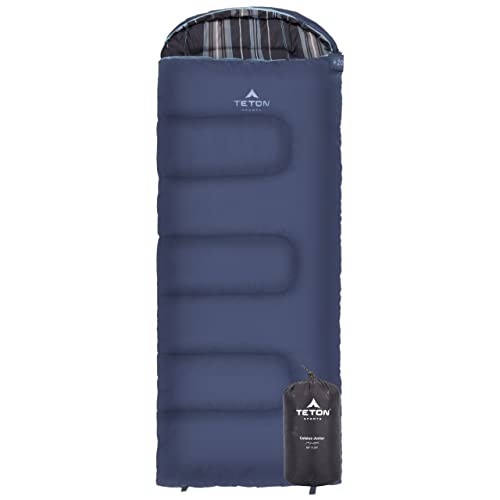
The TETON Sports Celsius Junior Sleeping Bag is the warmest kids bag in this guide, with a 20-degree rating that handles cold nights other kids bags cannot. That rating makes it the pick for mountain camping, late-season trips, and any family whose child sleeps cold. The bag is built on the same design as the adult Celsius line, scaled down to a kids size of about 66 x 26 inches, and it carries the same practical features: a soft brushed lining, a roomy rectangular cut, a two-way zipper, and an included compression sack. The difference is the warmth, and on a frosty morning, warmth is the only feature that matters.
A 20-degree rating changes what a family can plan. With this bag, a spring campout in the mountains, a fall trip when the leaves are turning, or a winter cabin weekend all become comfortable rather than chilly. The fill is a synthetic fiber that keeps insulating even when damp, which is a real advantage on trips where tent condensation, wet ground, or a spilled drink can dampen a bag. The lining is soft against the skin, which matters for children who sleep in short sleeves and who will notice a scratchy lining within minutes. The rectangular cut gives the child room to move, bend the knees, and roll over, which is a comfort that mummy bags trade away for warmth. The Celsius Junior keeps both: the rectangular room and a rating that handles cold nights.
The size fits children up to about 5 feet tall, and the 66-inch length leaves a few inches of growing room for most kids in the target age range. The width is generous, so a child who sleeps with a stuffed animal or a small pillow inside the bag will still have room. The two-way zipper opens from the top or the bottom, which lets a child vent heat around the feet on a mild night without unzipping the whole bag and losing all the warmth. The zipper also lets the bag open flat into a blanket, which is useful around a campfire or on a cabin bunk. The compression sack packs the bag down for transport, and the sack is sized so the bag fits without a struggle, which is not always true of cold-weather bags with thick fill.
Weight is the trade-off for warmth, and families should expect this bag to be heavier than the lightweight picks in this guide. The thicker fill that keeps a child warm at 20 degrees adds bulk and weight, and the packed bag takes up more space in a trunk or a duffel. For car camping, cabin trips, and short walk-in sites, that trade-off is easy to accept, because the bag is carried only a short distance. For long hiking trips with a young child, the lighter REDCAMP bag is the better choice, and this bag is better saved for trips where the car stays close. That is the honest way to think about warmth and weight: they pull in opposite directions, and the right bag is the one that matches the trip rather than the one that wins on a single number.
This bag suits cold sleepers, mountain families, and anyone planning shoulder-season camping. It is the right pick when the forecast calls for cold nights, when the campsite sits at altitude, or when the child has complained about being cold in a lighter bag. It is not the right pick for hot summer nights, when a 20-degree bag will feel too warm, and it is not the lightest pick for hiking. Paired with a warm base layer and a good sleeping pad underneath, which insulates the child from cold ground, the Celsius Junior turns cold nights into comfortable ones, and that comfort is what makes a child ask to camp again.
Specs
- Temperature rating: 20 degrees Fahrenheit
- Size: about 66 x 26 inches
- Shape: Rectangular
- Lining: Soft brushed lining
- Fill: Synthetic fiber fill that insulates when damp
- Stuff sack: Compression sack included
- Closure: Two-way zipper
- Care: Machine washable, air dry
- Best for: Cold nights, mountain camping, and cold sleepers
- Value group: Premium
Coleman Kids 30-Degree Mummy Sleeping Bag
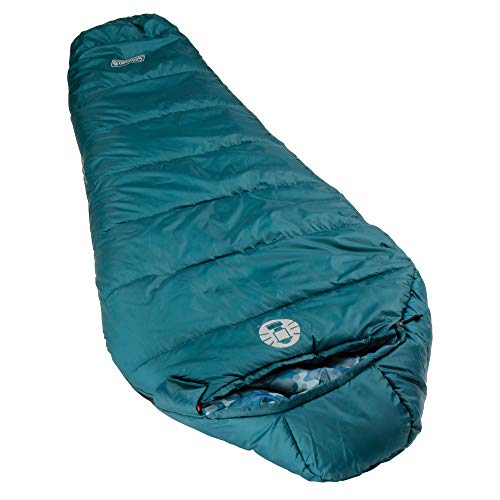
The Coleman Kids 30-Degree Mummy Sleeping Bag is the cold-sleeper pick for spring and fall, and it fills the gap between the warm-weather Coleman Kids 50 and the deep-cold TETON Celsius Junior. A 30-degree rating handles nights that dip into the 30s and 40s, which covers most spring and fall camping in mild climates, and the mummy shape wraps the body closely so warm air stays near the sleeper instead of pooling in empty corners. For a child who sleeps cold in a rectangular bag, the tapered foot and snug hood of this bag can make the difference between a good night and a midnight complaint about cold feet.
The mummy shape is the defining feature. The bag narrows from the shoulders to the feet, which cuts the air space inside the bag and keeps the child’s own body heat close. A hood with a drawstring cinches around the head on cold nights, and the two-way zipper lets the sleeper vent heat from the bottom when the night turns milder than expected. The shape also cuts weight and pack size compared with a rectangular bag of the same warmth, because there is less fabric and less fill to carry. The trade-off is room to move: a child who likes to sprawl will feel the taper, especially around the legs. Most children adjust within a night or two, and a practice sleepover at home is the best way to find out whether the shape suits your child before a real trip.
The 30-degree rating deserves a careful read. It means the bag is built for nights down to 30 degrees, but comfort depends on what the child wears inside, what sleeps underneath, and how the child sleeps. A warm base layer, a good sleeping pad, and a dry tent all add real warmth, and a child in warm sleep clothes inside this bag will sleep warmer than the rating alone suggests. On the other hand, a child in thin clothes on a bare tent floor will feel colder than the rating suggests, because the ground steals heat from below no matter how good the bag is. The practical lesson is to treat the rating as a guide rather than a promise, and to pack an extra fleece layer for nights that turn colder than the forecast. If the night turns out warmer than expected, the bag unzips and works as a cover, so the 30-degree rating rarely feels too warm in the way a 20-degree bag can on a summer night.
This bag suits children who sleep cold, families who camp in spring and fall, and anyone who wants a warmer bag without going all the way to a 20-degree rating. It is the right pick when summer nights are too warm for a mummy bag but fall nights are too cold for a 50-degree bag, and when the child is ready for a snug shape that keeps warmth close. It is not the right pick for hot summer camping, when a lighter rectangular bag will feel more comfortable, and it is not the right pick for a child who needs room to sprawl. For the large middle of the camping season, when evenings are cool and mornings are crisp, the Coleman Kids 30-Degree Mummy is the bag that keeps a cold sleeper comfortable without overheating.
Specs
- Temperature rating: 30 degrees Fahrenheit
- Shape: Mummy
- Hood: Adjustable hood with drawstring
- Shell: Durable polyester outer layer
- Lining: Smooth lining that feels soft against skin
- Closure: Two-way zipper
- Stuff sack: Included
- Care: Machine washable, air dry
- Best for: Cold sleepers and spring and fall camping
- Value group: Mid-range
Kids Sleeping Bags Compared Side by Side
The fastest way to choose is to match the bag to the trip. For summer camp, backyard campouts, and sleepovers, the Coleman Kids 50 is the simplest answer, because its 50-degree rating matches warm nights and its glow-in-the-dark design makes it fun. For a child who is tall for their age or a family that wants one bag for children and adults, the MalloMe bag is the flexible answer, because its full size and three-season range cover more situations than a kids-only bag. For hiking and backpacking, the REDCAMP mummy is the clear answer, because its 1.3-pound weight and small packed size let a child carry their own gear. For cold nights and mountain trips, the TETON Celsius Junior is the warm answer, because its 20-degree rating handles frost and late-season cold. For spring and fall, when nights are cool but not freezing, the Coleman 30-Degree Mummy is the middle answer, because its snug shape keeps a cold sleeper warm without the bulk of a deep-cold bag.
Warmth and weight pull in opposite directions, and every bag in this guide sits somewhere on that line. The lightest bag is the REDCAMP at about 1.3 pounds, and it is also the least warm, with a range that starts at 50 degrees. The warmest bag is the TETON at 20 degrees, and it is also the heaviest and bulkiest to pack. The Coleman Kids 50 and the Coleman 30-Degree Mummy sit in the middle, with the 50-degree bag lighter and the 30-degree bag warmer. The MalloMe bag sits apart from the others because its size, not its rating, is the point: it is the bag for a child who has outgrown kids sizes or a family that wants one design for everyone.
Shape is the second comparison to make. Rectangular bags give room to move and double as blankets, which suits restless sleepers and warm nights. Mummy bags hug the body and keep warmth close, which suits cold sleepers and cool nights. This guide has three rectangular bags and two mummy bags, so either preference is covered. If your child has never slept in a mummy bag, try one at home first, because the snug fit surprises some children and delights others. If your child has never slept in a rectangular bag, the adjustment is smaller, because the shape feels like a blanket with a zipper. Either way, the zipper matters: a two-way zipper that opens from the bottom lets a child cool their feet without losing all the warmth, and a zipper guard keeps the lining from snagging at bedtime.
Packing and Care Tips for Kids Sleeping Bags
A sleeping bag lasts longer when it is packed and stored well, and the habits are simple enough for a child to learn. Stuff the bag into its sack rather than rolling it, because stuffing is faster, easier, and kinder to the fill than a tight roll. Start by pushing the foot of the bag into the sack first, then feed the rest in a handful at a time, and let the child do the last push so they learn the motion. On the trail, keep the bag in its sack inside the backpack, away from water bottles and snacks that might leak. At camp, air the bag out each morning by draping it over a chair, a line, or a tent pole for a while before stuffing it, which lets moisture from the night escape and keeps the bag fresh. Shake the bag before bedtime to loft the fill, which restores warmth that compression takes away.
Washing is straightforward but worth doing right. Machine wash on a gentle cycle with mild soap, and skip fabric softener, which can coat the fill and reduce loft. Air dry the bag rather than using high heat, and give it plenty of time, because thick fill dries slowly and a damp bag packed away will smell stale. Wash the bag a few days before a trip rather than the night before, so the fill has time to loft fully. Between trips, store the bag loosely in a large cotton sack or hung in a closet, not compressed in its stuff sack for months, because fill that stays compressed loses loft and warmth. A small mesh laundry bag keeps a kids bag clean on a dusty car ride home, and a quick wipe of the shell with a damp cloth handles most mud without a full wash.
Frequently Asked Questions
What temperature rating should I choose for a kids sleeping bag?
Choose a bag rated a little colder than the coldest night you expect, because a bag that is slightly too warm can be unzipped and used as a blanket, while a bag that is too cold cannot be made warmer at midnight. A 50-degree bag suits summer nights and sleepovers, a 30-degree bag suits spring and fall camping, and a 20-degree bag suits mountain trips and late-season cold. Consider how your child sleeps at home: a child who kicks off blankets will be fine in a lighter bag, while a child who burrows under covers needs a warmer rating. Layering helps too, because warm sleep clothes inside the bag add real warmth on a chilly night.
How long will a kids sleeping bag last before my child outgrows it?
Most kids sleeping bags in this guide fit children up to about 5 feet tall, and a bag bought with a few inches to spare usually lasts two or three seasons of growth. Measure your child standing up and add a few inches for wiggle room, then compare that number with the bag length. A bag that fits today with room to spare is a better buy than a bag that fits exactly, because children grow fast and a bag that is slightly long can be shortened by tucking a fleece blanket into the foot. When your child passes 5 feet tall, a full-size bag such as the MalloMe pick in this guide is the next step, because it fits adults as well as older kids.
Are mummy sleeping bags comfortable for kids who move a lot in their sleep?
Mummy bags feel snug by design, and restless sleepers sometimes need a night or two to adjust to the tapered shape. The snug fit is what keeps warm air close and makes mummy bags warmer for their weight, so the trade-off is real: warmth and light weight in exchange for room to sprawl. A practice sleepover at home is the best way to find out whether your child likes the shape, because a living room trial is easier than a midnight discovery on a camping trip. If your child dislikes the taper, a rectangular bag is the better choice, because it gives room to turn over and doubles as a blanket on warm nights.
Can kids sleeping bags go in the washing machine?
Every bag in this guide is machine washable on a gentle cycle with mild soap, and air drying is the safest way to protect the fill and the shell. Skip fabric softener, which can coat the fill and reduce loft, and wash the bag a few days before a trip so the fill has time to loft fully before bedtime. Air the bag each morning on a trip to let moisture escape, and store it loosely at home between trips rather than compressed in its stuff sack for months. A quick wipe of the shell with a damp cloth handles most mud and grass without a full wash.
Conclusion
The best kids sleeping bag is the one that matches your child, your climate, and your plans. For most families, the Coleman Kids 50 Sleeping Bag is the right starting point, because it covers summer camping and sleepovers with a fun design, a fair rating, and a washable shell. For older kids and growing families, the MalloMe Sleeping Bag adds size and flexibility that a kids-only bag cannot match. For hiking trips, the REDCAMP Kids Mummy Ultra Lightweight Sleeping Bag carries its own weight at about 1.3 pounds and packs small enough for a child-sized backpack. For cold nights, the TETON Sports Celsius Junior Sleeping Bag brings a 20-degree rating that handles mountain mornings and late-season trips. For spring and fall, the Coleman Kids 30-Degree Mummy Sleeping Bag keeps a cold sleeper warm in a snug shape that traps heat close to the body. Measure your child, check the coldest night on your calendar, and pick the bag whose rating and shape fit that plan. Then practice at home, pack the bag together, and let your child carry it to the tent, because the best part of a kids sleeping bag is not the bag itself but the nights of camping it makes possible.
Product and ASIN Reference
| Product | ASIN |
|---|---|
| Coleman Kids 50 Sleeping Bag | B0CVSDQXJB |
| MalloMe Sleeping Bag | B077XQDZW4 |
| REDCAMP Kids Mummy Ultra Lightweight Sleeping Bag | B0DY766N28 |
| TETON Sports Celsius Junior Sleeping Bag | B007JTLQHQ |
| Coleman Kids 30-Degree Mummy Sleeping Bag | B00HN91AE6 |