Our Short List of 3

- Brand: Mattel Games
- Players: 2 to 10
- Ages: 7 years and up
- Cards: 112 cards plus instructions

- Brand: Exploding Kittens
- Players: 2 to 5
- Ages: 7 years and up
- Cards: 56 cards
- Brand: Dolphin Hat Games
- Players: 2 to 8
- Ages: 8 years and up
- Cards: 64 cards
All 5 Picks at a Glance
| Product | Specs | Action |
|---|---|---|
| 1. Mattel Games UNO Card Game in Collectible Storage Tin |
| Check price on Amazon |
| 2. Exploding Kittens Original Edition |
| Check price on Amazon |
| 3. Taco Cat Goat Cheese Pizza |
| Check price on Amazon |
 4. Gamewright Sleeping Queens |
| Check price on Amazon |
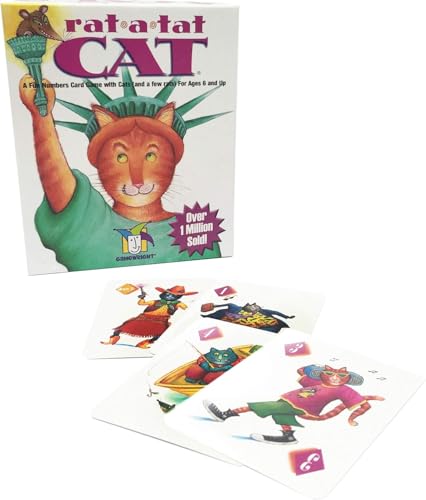 5. Gamewright Rat-a-Tat Cat |
| Check price on Amazon |
Key takeaways
- Compare the best kids card games for ages 6 and up, from classic matching decks to fast slapping games and story-driven strategy, and find the right deck.
The best kids card games are the Mattel Games UNO Card Game in a Collectible Storage Tin for the classic matching game every family should own first, the Exploding Kittens Original Edition for older kids who want quick rounds with real choices, the Taco Cat Goat Cheese Pizza card game for large groups that want a loud and fast matching game, the Gamewright Sleeping Queens card game for children who are ready for gentle strategy wrapped in a story, and the Gamewright Rat-a-Tat Cat card game for younger players who are learning numbers and memory at the same time. Each one of these five decks earns its place for a different reason, and together they cover the ages from six upward, groups from two players to ten, and evenings from a ten-minute filler before bedtime to a full hour of rematches around the table.
A card game is the easiest kind of family game to own, because a deck fits in a bag, sets up in under a minute, and asks for nothing more than a flat surface and a willing group. The hard part is choosing among the dozens of decks on the shelf, because a game that delights an eight-year-old can bore a twelve-year-old, and a game that seats ten players can feel thin with two. This guide compares the five decks across age fit, player count, round length, reading and counting demands, and how well the cards survive small hands and repeated play, so a family can pick the deck that matches the children at the table rather than the brightest box in the aisle.
As an Amazon Associate, we earn from qualifying purchases.
Table of Contents
- How to Choose a Kids Card Game
- Quick Comparison
- 1. Mattel Games UNO Card Game in Collectible Storage Tin
- 2. Exploding Kittens Original Edition
- 3. Taco Cat Goat Cheese Pizza
- 4. Gamewright Sleeping Queens
- 5. Gamewright Rat-a-Tat Cat
- Age and Fit Checks Before You Buy
- Frequently Asked Questions
- Conclusion
- Product and ASIN Reference
How to Choose a Kids Card Game
Start with the youngest player at the table, because the age on the box is a guide to reading, counting, and patience, not a rule about fun. A game graded for ages seven and up usually expects a child to read short card labels, hold seven or more cards in a hand, and wait through other players’ turns without losing track of the game. A game graded for ages six and up usually leans on pictures and numbers instead of words, and it keeps turns short enough that a young child stays in the game. A game graded for ages eight and up usually adds a layer of planning, whether that means choosing which card to keep, remembering what has already been played, or weighing a small risk against a reward. When the youngest player is six, the safest first deck is one built on matching and memory, and the deeper strategy decks can wait a year or two until the child asks for a harder game. When the youngest player is eight or nine, the full range opens up, and the choice turns on temperament rather than age: a child who likes fast noise and quick reflexes will reach for a different deck than a child who likes quiet thinking and a story.
Count the players who will actually sit down together, because a deck built for two to five players behaves very differently from a deck built for two to ten. A small family of three or four can play almost anything, and the tighter decks often play better at that size, because every player gets more turns and the game moves faster. A large family, a birthday party, or a classroom group needs a deck that seats six or more without splitting into two games, and only a few decks in this guide do that well. The matching game at the head of this guide seats up to ten players, which makes it the natural pick for a crowd, while the slapping game seats up to eight, which makes it the pick for a party that wants everyone in at once. The three strategy and memory decks seat five or six players, which suits a family table, and a group larger than that will need to run two tables or take turns. A buyer who regularly hosts grandparents, cousins, or friends should weigh the top player count as heavily as the age grade, because a deck that seats only five will leave half the room watching.
Check the round length against the time a family really has, because a fifteen-minute game and a forty-minute game serve different evenings. A short round fits between dinner and bedtime, fills a wait at a restaurant table, and survives a car ride without anyone asking when it will end. A longer game suits a weekend afternoon, a holiday gathering, or a rainy day when the table is free for an hour. All five decks in this guide play short rounds, and that is deliberate: a kids card game should end while everyone still wants one more round, not after the youngest player has wandered away. The slapping game and the memory game run the shortest rounds, often finishing in about ten minutes, while the matching game and the strategy decks run a little longer, closer to fifteen or twenty minutes depending on the players. A family that wants a game for school nights should lean toward the shorter decks, and a family that wants a game for a long evening can let the rounds stack into a series, with the winner of the most rounds taking the night.
Match the reading and counting load to the child, because a game that asks for skills a child does not yet have will sit on the shelf. A matching game asks a child to compare a color or a number, which most six-year-olds can do, and the action cards add a small amount of reading that an adult can explain in one round. A memory game asks a child to remember the position of face-down cards and add small numbers, which builds number sense without feeling like homework. A story strategy game asks a child to add number cards together to wake a queen, which suits a child who is comfortable with addition up to ten or twelve, and it rewards a child who can plan one move ahead. A drafting and bluffing game asks a child to read short action labels and hold a plan across several turns, which suits older children who enjoy outthinking the table. None of these decks asks for long reading passages, and that is one of the strengths of the category: the rules fit on a single sheet, and a child who has played one round can usually teach the next player.
Think about where the deck will be played, because a card game that lives in a bag needs tougher cards and a better box than a game that lives on a shelf. A deck that travels to grandparents, on holiday, or to a park needs a storage tin or a sturdy box, because loose cards bend at the corners, crease across the middle, and vanish into seat cushions. A deck that stays at home can live in a plain box, but it still benefits from a lid that closes firmly, because a box that spills across a shelf loses cards one at a time until the game no longer plays properly. The matching game in this guide comes in a collectible tin that solves the travel problem outright, and the other four decks come in boxes that are sturdy enough for a shelf but deserve a rubber band or a small pouch when they travel. A family that plays outdoors should also think about wind, because a light card deck scatters in a breeze, and a heavier card stock or a sheltered table makes the game far more pleasant.
Look at what the game teaches without announcing it, because the best kids card games build skills that show up at school. Matching builds color and number recognition. Memory builds concentration and recall. Adding number cards builds arithmetic fluency. Choosing which card to keep and which to pass builds planning. Waiting for a turn builds patience, and losing a round gracefully builds sportsmanship. A parent does not need to choose a game for its lessons, because children choose a game for its fun, but it helps to know that the fun and the learning travel together. The memory game in this guide is the strongest pick for a child who is learning numbers, the story strategy game is the strongest pick for a child who is learning addition, and the bluffing game is the strongest pick for a child who is ready to think about what other players might do next.
Consider replay value, because a deck that plays the same way every time will be shelved after a week. A shuffled deck deals a different game every round, which is the built-in replay value of the whole category, but some decks add more variety than others. A matching game changes with every hand, yet the shape of each round stays familiar, which is comforting for younger players and can feel repetitive for older ones. A bluffing game changes with every draw, and the choices around when to play an action card keep the game fresh for dozens of rounds. A slapping game changes with the order of the cards, and the speed of the table matters more than the cards themselves. A story strategy game changes with which queens wake and which get stolen, so no two games tell the same story. A memory game changes with the shuffle, and the numbers each player holds make every round a different puzzle. A family that plays the same deck three nights in a row will notice these differences, and the decks with the most variety are the ones that stay on the table longest.
Quick Comparison
| Game | Best for | Players | Ages | Round length | Tier |
|---|---|---|---|---|---|
| Mattel Games UNO Card Game in Collectible Storage Tin | Classic matching for the whole family | 2 to 10 | 7 and up | About 15 minutes | Budget |
| Exploding Kittens Original Edition | Quick rounds with choices and bluffing | 2 to 5 | 7 and up | About 15 minutes | Premium |
| Taco Cat Goat Cheese Pizza | Large groups and fast reflexes | 2 to 8 | 8 and up | About 10 to 15 minutes | Budget |
| Gamewright Sleeping Queens | Gentle strategy with a story | 2 to 5 | 8 and up | Short rounds | Mid-range |
| Gamewright Rat-a-Tat Cat | Youngest players, memory and numbers | 2 to 6 | 6 and up | About 10 minutes | Mid-range |
1. Mattel Games UNO Card Game in Collectible Storage Tin
- Brand: Mattel Games
- Players: 2 to 10
- Ages: 7 years and up
- Cards: 112 cards plus instructions
The Mattel Games UNO Card Game in a Collectible Storage Tin is the classic matching game, and it is the deck to buy first when a family owns no card games at all. Players take turns matching a card in their hand with the card on top of the discard pile, either by color or by number, and the first player to get rid of all their cards wins the round. The rules take about a minute to explain, which means a child who has never played can join the second round with confidence, and a grandparent who has not played in years can sit down without a refresher. The deck includes action cards that change the flow of a round: Reverse cards send play in the other direction, Skip cards pass over the next player, Draw Two cards force the next player to take two cards, Wild cards let the player choose a new color, and Wild Draw Four cards combine a color change with a four-card penalty. Those five action types are the whole engine of the game, and they are enough to keep a round lively without making the rules hard to remember.
What sets this deck apart from the other four in this guide is its player count. It seats two to ten players, which is the widest range here, and that range makes it the only deck in this guide that can hold a whole extended family at one table. A family of four plays a tight, quick game, and a party of eight or nine plays a louder, longer game in which the action cards land more often and the lead changes hands several times before anyone gets close to going out. The scoring adds a second layer for families who want it: points accumulate across rounds, with the winner of each round collecting points for the cards left in the other players’ hands, and the first player to reach five hundred points wins the match. A family that prefers a lighter evening can ignore the scoring entirely and simply play round after round, with each round standing on its own. That flexibility is part of why this deck has stayed on family shelves for decades, because it adapts to the group in front of it rather than asking the group to adapt to it.
The tin is a genuine advantage, not a decoration. Cards stored loose in a paper box bend and fray, and a deck that travels in a bag without a firm case arrives with curled corners and a lid that will not stay shut. This edition packs its deck into a red collectible tin that closes firmly, survives a backpack, and keeps the cards flat between games. The tin also makes the deck easy to find on a shelf, because its shape and color stand out among square boxes, and it makes the game easy to carry to a picnic, a waiting room, or a holiday gathering. Inside the tin, the deck holds one hundred twelve cards plus instructions, which is enough for the full game with all of its action cards, and the cards carry graphic symbols alongside their colors, so players who have trouble telling colors apart can read the symbols instead. Three customizable Wild cards invite a family to write its own house rules, which is a small touch that gives the deck a personal flavor: a family can invent a rule that fits its own table, write it on a blank card, and play with it for years.
The trade is that this game leans on luck more than the strategy decks below. A player who draws well can win a round without making a single clever choice, and a player who draws badly can sit with a full hand while the table cycles around them. Younger players rarely mind this, because the action cards give every player a moment of power, and the moment when a player calls out the name of the game with one card left is exciting regardless of who wins. Older players who want a game of pure skill will find more depth in the bluffing and strategy decks in this guide, and they may prefer this deck as the warm-up game before a longer evening rather than the main event. A buyer should also confirm the edition when ordering, because this game is sold in many themed decks and bundle packs, and the edition reviewed here is the classic deck in the collectible tin, with one hundred twelve cards and instructions, for two to ten players ages seven and up. The deck suits first-time buyers, large families, travelers, and anyone who wants the single most versatile card game in the category.
2. Exploding Kittens Original Edition
- Brand: Exploding Kittens
- Players: 2 to 5
- Ages: 7 years and up
- Cards: 56 cards
The Exploding Kittens Original Edition is a fast, funny card game for two to five players ages seven and up, and it is the deck to buy when the children at the table are ready for choices, bluffing, and a little delicious tension. The premise is simple and immediately clear: players draw cards in turn, and the player who draws an Exploding Kitten is out of the game unless a Defuse card can save them. Between draws, players can play action cards that let them peek at the deck, skip a turn, attack the next player, shuffle the deck, or steal a card from a rival hand. Those actions turn a simple draw into a series of small decisions, and the decisions are what make the game replayable: the same deck plays differently every time, because the order of the cards and the timing of the actions never repeat.
What sets this deck apart from the matching game above is depth. Where the matching game asks a player to find a color or a number, this game asks a player to judge risk, to hold a Defuse card for the right moment, and to guess what the other players are holding. A child who plays a Skip card at the wrong moment wastes it, and a child who holds a Peek card until the deck is thin can dodge the card that would end their game. That layer of thinking suits older children and teens, and it gives adults a reason to stay at the table rather than dealing the cards and drifting away. The humor helps too: the cards are illustrated in a bright cartoon style, with jokes on the card faces that reward a child who reads them, and the tone stays light even when a player is eliminated, because the elimination itself is part of the joke. The game plays in about fifteen minutes, which keeps the sting of elimination short, and the next round starts quickly enough that nobody waits long to play again.
The deck holds fifty-six cards in a compact box, and the box is small enough to fit in a pocket, a purse, or the side pocket of a backpack, which makes this the easiest deck in this guide to carry. A family that plays in waiting rooms, on trains, or at a picnic table will appreciate that portability, because the game needs nothing but the deck and a flat surface, and it sets up in the time it takes to shuffle. The player count of two to five suits a family table, and the game plays best with three or four, because two players see too much of the deck and five players make the rounds between turns a little longer. A buyer should confirm the edition before ordering, because this game is sold in a travel-sized deck, a party pack for larger groups, themed decks, and an anniversary tin, and the original edition reviewed here is the fifty-six-card deck for two to five players ages seven and up. The standard deck is the right starting point, and the larger packs make sense only after a family knows it loves the game.
The trade is the elimination. A player who draws an Exploding Kitten early, without a Defuse card, leaves the game while the others keep playing, and a young child can find that frustrating, especially if it happens twice in a row. The short rounds soften this, and many families play with a house rule that a knocked-out player deals the next round or keeps score, but a parent of a sensitive six- or seven-year-old should know about it before buying. The humor is also aimed at older kids: younger children will enjoy the pictures and the drawing, but the jokes land best with children who can read the card text and appreciate the absurdity. The deck suits families with older kids and teens, adults who play with their children, and any group that wants a fast game with real decisions packed into fifteen minutes.
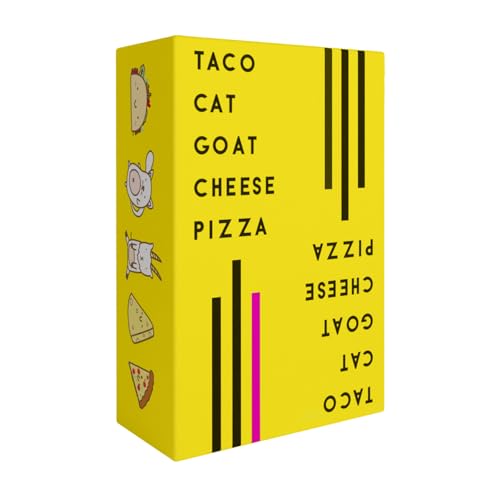
3. Taco Cat Goat Cheese Pizza
- Brand: Dolphin Hat Games
- Players: 2 to 8
- Ages: 8 years and up
- Cards: 64 cards
The Taco Cat Goat Cheese Pizza card game is a loud, fast matching and slapping game for two to eight players ages eight and up, and it is the deck to buy when the goal is a whole room laughing at once. The rules fit in a single sentence: players take turns flipping cards onto a pile while saying taco, cat, goat, cheese, pizza in order, and when the card matches the word, everyone slaps the pile, with the slowest hand taking the whole stack. Three special action cards break the rhythm and keep the table alert: the gorilla card makes everyone beat their chest, the groundhog card makes everyone knock on the table, and the narwhal card makes everyone clap above their head. Those gestures are the heart of the game, because they turn a quiet matching exercise into a physical comedy, and a child who misses a gesture is as funny as a child who slaps first.
What sets this deck apart from the other four in this guide is its energy. The matching game is calm by comparison, the bluffing game is tense, the story game is thoughtful, and the memory game is quiet, but this game is noisy, physical, and fast, and it suits a group that wants to burn off energy rather than sit still. The rounds last about ten to fifteen minutes, which is short enough to play three or four times in an evening, and the rules are so simple that a new player can learn by watching a single round. The player count of two to eight makes it the second-widest in this guide, and it is the best pick for a birthday party, a classroom, or a large family gathering, because everyone can play at once without splitting into teams. The deck holds sixty-four cards, which is a small deck that shuffles quickly and fits in a pocket, and the game needs nothing more than the deck and a flat surface, so it travels as easily as the bluffing game above.
The simplicity is also the trade. There is almost no strategy here: a player cannot plan, cannot bluff, and cannot outthink the table, because the game is won by fast eyes and fast hands. A child who loves thinking games will find it thin after a few rounds, and a family that plays it every night will tire of it faster than the strategy decks in this guide. The slapping can also be rough on the cards and on the table, so a parent should set a simple ground rule before the first round: slap the pile, not each other, and keep the deck dry, because damp or bent cards stick together and slow the game. The age grade of eight and up reflects the speed and the hand-eye coordination the game asks for, and younger children can join with an adult beside them, but they will usually lose the slap to older hands. A buyer should confirm the edition when ordering, because this game is sold in a standard edition, a large edition with oversized cards, and themed editions, and the standard edition reviewed here is the sixty-four-card deck for two to eight players ages eight and up. The deck suits large groups, parties, classrooms, and any family that wants the cheapest path to a loud and happy evening.
4. Gamewright Sleeping Queens
- Brand: Gamewright
- Players: 2 to 5
- Ages: 8 years and up
- Cards: 79 cards
The Gamewright Sleeping Queens card game is a story-driven strategy game for two to five players ages eight and up, and it is the deck to buy when a child is ready for real thinking wrapped in a fairy tale. Twelve queens sleep face down in the middle of the table, each with a name, a picture, and a point value, and players wake them by playing a king card, then guard them against rivals. Knights can steal a woken queen, dragons can block a knight, jesters can start a rhyming contest, and number cards can be added together or used to wake queens in combination. The player who wakes the most valuable queens wins, and the game ends when the queens are awake or the deck runs out. The story gives every move a picture a child can hold in mind, which makes the strategy feel like play rather than arithmetic, even though addition is quietly doing the work underneath.
What sets this deck apart from the other four in this guide is the way it teaches planning without ever feeling like a lesson. A child who wants a particular queen must decide whether to wake her now or wait, whether to spend a knight on a rival’s best queen or save it, and whether to risk a dragon being played against that knight. Those choices are small, and a child can make them in seconds, but they add up across a round into a genuine game of judgment. The number cards deepen the learning: a child adds two number cards together to match the value needed, which builds addition fluency in the same way the memory game below builds number recognition, and the game rewards a child who can add quickly without punishing a child who counts on fingers. The deck holds seventy-nine cards, and the rounds are short, so a family can play two or three games in an evening and see different queens wake each time, which keeps the story fresh.
The artwork and the theme make this deck the most appealing in this guide for a child who loves stories, and the game suits a quiet evening at home better than a noisy party. It plays best with three to five players, because two players see too much of the deck and the stealing loses its edge, and the short rounds mean a family can finish a game, talk about the queens that woke, and start again without a long reset. The box is compact and the cards are a standard weight, so the deck travels well in a bag, though it deserves a rubber band around the box when it rides in a backpack, because the lid can slide open and spill the small deck. A buyer should confirm the edition when ordering, because a sequel deck with new queens is sold separately, and the original game reviewed here is the seventy-nine-card deck for two to five players ages eight and up. The deck suits families with older children, grandparents playing with grandchildren, and any group that wants a game with a story and a little thinking at the campsite, the kitchen table, or the holiday cabin.
The trade is the luck. A queen woken by a king can be stolen by a knight, and a dragon can block that knight, so a player who plays well can still lose a queen to a single card, and a child who loses a favorite queen can feel the sting. The short rounds and the story soften this, because the next round brings new queens and new chances, but a parent of a child who takes losing hard should be ready to talk about it the first time a queen is stolen. The game also asks for more patience than the slapping game above, because turns involve looking at the queens, counting number cards, and choosing among options, and a restless younger sibling may wander before the round ends. The deck suits children who like stories and gentle competition, and it is the strongest pick in this guide for a child who is ready to move beyond pure matching into games that reward thinking ahead.
5. Gamewright Rat-a-Tat Cat
- Brand: Gamewright
- Players: 2 to 6
- Ages: 6 years and up
- Cards: Cat cards with numbers from zero upward
The Gamewright Rat-a-Tat Cat card game is a memory and number game for two to six players ages six and up, and it is the deck to buy first when the youngest player at the table is six or seven. Each player holds four cards face down, peeks at two of them, and then tries to end the round with the lowest total by drawing, swapping, and remembering. Three special cards add spice without adding complexity: Peek cards let a player look at one of their own cards, Swap cards let a player trade a card with a rival, and Draw Two cards let a player take two cards and keep the better one. The goal is simple enough for a six-year-old to grasp in a single round, and the memory load is light enough that a young child can compete with an adult, which is rare in a family game and is the reason this deck earns its place in this guide.
What sets this deck apart from the other four in this guide is its age fit. It is the only deck here graded for ages six and up, and that lower grade matters, because a six-year-old who cannot yet read well can still play it: the cards show cats and numbers, not sentences, and the whole game runs on remembering positions and adding small numbers. The game builds number sense in a way that feels like play, because a child who holds a nine wants to swap it for something smaller, a child who holds a zero wants to protect it, and a child who forgets a card must guess whether to keep it or trade it away. Those moments teach estimation and memory at the same time, and they do it without a worksheet in sight. The rounds last about ten minutes, which fits a young child’s attention span, and the player count of two to six makes it the widest of the three strategy and memory decks, so it suits a family table and a small classroom group alike.
The deck is small, light, and easy to carry, and the game needs nothing more than the deck and a flat surface, which makes it a strong pick for travel, waiting rooms, and restaurants. The rules fit on a single sheet, and a child who has played one round can teach the next player, which builds confidence as well as memory. The game also plays well across ages, because an adult gains no great advantage from experience: the shuffle decides much of the game, and the memory element rewards attention rather than age. A family with children of different ages will find this the fairest deck in the guide, because a six-year-old and a twelve-year-old can play on nearly even terms, and the winner is often decided by who remembered best rather than who is oldest.
The trade is the simplicity. An older child who has played the deck a dozen times will learn its shape quickly, and the game offers less depth than the bluffing game or the story game above, so it works best as a first deck or a warm-up game rather than the only deck a family owns. A buyer should also note that the game is at its best with three or more players, because two players see too much of each other’s play, and the swapping loses its surprise. The deck suits families with young children, grandparents who want a game a grandchild can win, teachers who want a quiet table game, and any family that wants a gentle first step into card games before moving on to the deeper decks in this guide.
Age and Fit Checks Before You Buy
Check the age grade against the youngest player, and buy for that child first. A deck graded for ages eight and up will frustrate a six-year-old who cannot yet add quickly or read short card labels, and a deck graded for ages six and up will bore a twelve-year-old who wants a real contest. The spread in this guide runs from six to eight, which is narrow enough that a family can own two or three of these decks and cover every child in the house, and the right first purchase is the deck that matches the youngest regular player. A family with a six-year-old should start with the memory game, add the matching game next, and wait a year before the strategy decks. A family whose youngest player is eight can start anywhere in this guide and choose by temperament instead.
Count the hands, not just the players, because small hands hold fewer cards comfortably. A child of six or seven can hold four face-down cards without trouble, which is why the memory game suits that age so well, and the same child can hold seven cards with a little practice, which is what the matching game asks for. A child who struggles to hold a fan of cards will enjoy the games that keep hands small, and a parent can help by dealing fewer cards in the first few rounds or by letting a young child lay cards on the table instead of holding them. A card holder is a useful accessory for the youngest players, and it turns a frustrating evening into a pleasant one for a child whose hands are still growing.
Play one round together before judging a deck, because the first round teaches the game better than any review. A parent who reads the rules aloud, plays the first round open-handed, and lets the child ask questions will find that most of these decks click within five minutes. The matching game clicks fastest, the slapping game clicks loudest, the memory game clicks quietly, and the strategy decks click once a child sees a queen wake or a bluff succeed. A family that gives a new deck one full evening, with two or three rounds back to back, will know by the end of the night whether the deck belongs on the shelf or in the gift pile for a cousin.
Think about storage from the start, because a deck that loses cards loses its game. A tin, a sturdy box, or a small pouch keeps a deck together, and a habit of counting the cards back into the box at the end of the night keeps the game playable for years. The matching game in this guide solves this with its tin, and the other four decks benefit from a rubber band or a zip pouch when they travel. A family that owns several decks should keep each deck in its own box, because mixing two decks together creates a puzzle that no one enjoys solving.
Remember that the best deck is the one that gets played, not the one with the cleverest rules. A simple game played three nights a week beats a clever game that sits on a shelf, and a loud game that makes a whole room laugh beats a quiet game that only one child enjoys. The five decks in this guide all earn their place, but they earn it for different families, and the right choice is the one that matches the children, the group, and the evenings a family actually has.
Frequently Asked Questions
What is the best kids card game for a six-year-old?
The Gamewright Rat-a-Tat Cat card game is the best pick for a six-year-old, because it is graded for ages six and up, it runs on pictures and numbers rather than reading, and its rounds last about ten minutes, which fits a young child’s attention span. The matching game is a good second choice once the child can hold seven cards comfortably.
How many players can play the best kids card games?
It depends on the deck. The matching game seats two to ten players, the slapping game seats two to eight, the memory game seats two to six, and the bluffing game and the story game each seat two to five. A family that regularly plays with six or more people should choose the matching game or the slapping game so everyone can play at once.
Are these card games good for travel?
Yes, all five decks travel well, because each one needs nothing more than the deck and a flat surface. The matching game is the easiest to travel with, since it comes in a collectible tin that keeps the cards flat and protected, and the bluffing game and the memory game are small enough to fit in a pocket or a bag side pocket. The other decks should ride in a pouch or with a band around the box so the lid stays shut.
Do kids card games help children learn?
Yes, in small and practical ways. Matching builds color and number recognition, memory games build concentration and recall, adding number cards builds arithmetic fluency, and bluffing and strategy games build planning and patience. The learning works because it is folded into play, and a child who is having fun will practice a skill far longer than a child who is doing a worksheet.
Conclusion
The best kids card games are the ones that match the children at the table, and the five decks in this guide cover the range from a six-year-old’s first memory game to a teenager’s bluffing contest. Start with the Mattel Games UNO Card Game in a Collectible Storage Tin when a family owns no card games at all, because it seats the widest group, travels in its tin, and teaches the matching that every other card game builds on. Add the Gamewright Rat-a-Tat Cat card game when the youngest player is six or seven and needs a game built on pictures, numbers, and memory. Add the Taco Cat Goat Cheese Pizza card game when the group is large and wants a loud, fast evening. Add the Gamewright Sleeping Queens card game when a child is ready for gentle strategy wrapped in a story. Add the Exploding Kittens Original Edition when older kids and teens want quick rounds with real choices and a little tension. Any one of these decks can anchor a family game night, and together they give a family a shelf that grows with its children, one round at a time.
Product and ASIN Reference
| Product | ASIN |
|---|---|
| Mattel Games UNO Card Game in Collectible Storage Tin | B07P6MZPK3 |
| Exploding Kittens Original Edition | B010TQY7A8 |
| Taco Cat Goat Cheese Pizza | B077Z1R28P |
| Gamewright Sleeping Queens | B0009XBY3A |
| Gamewright Rat-a-Tat Cat | B00000GBQJ |