Key takeaways
- Find the best kites for kids for windy days, from easy delta and butterfly kites to octopus and pocket flyers the whole family can launch together.
A windy day can turn an ordinary afternoon at the park, the beach, or a wide school field into the kind of family outing children remember for years. Kites for kids work best when the first launch is easy. A kite that climbs quickly, stays steady without constant correction, and survives a few rough landings builds confidence fast. A kite that dives, spins, or needs expert hands does the opposite, and the outing can end before it really begins.
This guide brings together five styles: a butterfly two-pack for sharing, a frameless pocket kite for travel, a long-tailed octopus for gusty air, a three-pack for group outings, and a dual-line sport kite for older children ready for steering.
As an Amazon Associate, we earn from qualifying purchases.
Quick answer
For most families, start with a single-line delta or butterfly kite that launches in a light to moderate breeze and needs no complex assembly. Choose the HENGDA butterfly two-pack for siblings, the SINGARE octopus for gusty beach days, and the Mint three-pack for group outings. Pick the Prism pocket kite for travel and the HQ dual-line kite for older, patient learners.
HENGDA KITE 2 Pack Butterfly Kite

Butterfly kites are a natural first choice for children because the shape is cheerful, the wings are wide, and the flight tends to be gentle when the wind is steady. This HENGDA two-pack solves the most common family problem before it starts: two children, one kite, and a long argument. With two butterfly kites in the pack, siblings or friends can launch side by side, swap colors, and learn at their own pace without waiting for a turn.
The size is large enough to catch wind and be seen clearly, but not so large that a child is pulled around by it. Assembly is straightforward. An adult should handle the first setup, check the line, and choose an open area away from trees and power lines.
Butterfly kites reward a patient launch: let line out gradually and let the kite climb in steps rather than running hard. On gusty days, younger children do best with an adult holding the spool at first. For two flyers at once, this is the simplest recommendation here.
Prism Pocket Flyer Single Line Kite

The Prism Pocket Flyer takes a different approach to family kite flying: make the kite so small to carry that it actually comes along. This frameless single-line kite packs down into a compact pouch, so it fits in a backpack, a beach bag, or even a large coat pocket. There are no rigid spars to assemble, lose, or break, which removes the most fragile part of many beginner kites and makes impromptu flights on a hike or a trip far more likely.
With no frame, setup is unrolling the kite, attaching the line, and letting the wind lift it. That suits casual flyers who want a kite ready in moments. The trade-off is size: a pocket kite looks smaller in the sky than a large delta.
It shines in a smooth, moderate breeze and is less suited to strong, turbulent gusts near buildings or trees. As a travel or backup kite, the Pocket Flyer earns its place through convenience rather than scale.
SINGARE Large Octopus Kites
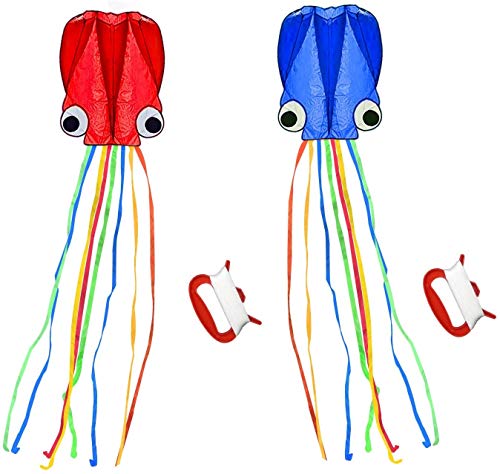
Octopus kites are among the most forgiving shapes for beginners, and the SINGARE large octopus set shows why. Instead of a rigid frame, the soft body fills with wind and the long flowing tails stream behind it, adding stability and a spectacular trail across the sky. Children love the movement, and adults appreciate that a frameless soft kite packs down small and does not snap a spar when it lands hard on sand or grass.
The long tails help the kite track steadily and make its direction easy to read, which helps a new flyer learn when to let out line. This style is especially good at the beach, where wind is smoother and stronger than inland.
Long tails can tangle if packed carelessly, so wind the line neatly. In very light wind a large soft kite may struggle to inflate, so save it for days with a real breeze. For windy coastal or open-field days, this is the most entertaining pick here.
Mint’s Colorful Life 3 Pack Kites

A three-pack changes the social side of kite flying. The Mint’s Colorful Life set brings three different kite shapes together, described as delta, dragon, and butterfly styles, so a family or small group can put several kites in the sky at once and each flyer can choose a favorite. That variety is useful for parties, cousins visiting, school holiday outings, and any household where one kite would spend more time being negotiated over than being flown.
Delta shapes are valued for steady flight, while dragon and butterfly shapes add character. Having different shapes lets a family learn what suits local conditions and favor the steadiest shape when wind rises. Adults should check line length and keep flyers spaced apart.
Spacing is the main discipline: lines cross easily when children drift together. Set clear standing spots and launch one kite at a time. Managed that way, this pack offers the best group value in the guide.
HQ Kites Symphony Beach III 1.3 Stunt Kite

The HQ Symphony Beach is the step-up pick for older children and adults who have mastered a single line and want to steer. This is a dual-line sport kite, which means the flyer holds two handles and can turn, climb, dive, and recover the kite with hand movements. That control is thrilling, and it turns passive holding into an active skill that can keep tweens, teens, and parents engaged long after a basic kite would feel tame.
A dual-line kite pulls noticeably more than a small single-line kite, so it belongs with older, stronger flyers. The maker guidance places this style for ages eight and up, and adult supervision and wide open space are essential during early sessions.
Expect a learning curve: early flights involve crashes, twisted lines, and relaunches, and that is normal. Choose sand or grass, start in a moderate steady wind, and keep sessions short. For an older child asking what comes next, this is the rewarding answer.
How to choose
Match the kite to the flyer first. For young children and true beginners, choose a single-line kite with simple assembly, a wide wing or a soft frameless body, and a size that catches wind without pulling hard. For siblings or groups, a two-pack or three-pack prevents waiting and arguments. For older children who already launch and land a basic kite confidently, a dual-line sport kite offers a real next challenge.
Match the kite to your usual wind next. Large deltas and butterfly kites launch well in light to moderate breezes at parks and fields. Soft octopus kites love the smoother, stronger wind at a beach. Frameless pocket kites suit moderate, steady air and travel. If your local wind is often gusty and swirling around trees and buildings, favor a stable shape with tails and fly from the most open ground you can find.
Check age guidance, wingspan, assembly, packing, and whether line and a handle are included before ordering. Store each kite wound neatly and dry, so it is ready in minutes on the next windy day.
Who should skip
Families with only small, enclosed outdoor spaces should skip large kites altogether until they have access to a park, beach, or field with clear sky. Kites need distance from roads, power lines, trees, and crowds, and a big kite in a small garden creates frustration and risk rather than fun. A pocket kite for trips to open spaces is the better purchase in that situation.
Anyone buying for a very young toddler as the main flyer should also pause. Holding a spool with adult help can be fun, but launching, line safety, and watching the sky for long periods suit older children better. For toddlers, choose to fly a simple kite as an adult while they watch and help hold, and wait before buying a dedicated kite of their own.
Finally, skip the dual-line stunt kite as a first purchase. Its speed, pull, and learning curve are a poor match for a child still learning how wind works. Start with a steady single-line kite, build success, and add the sport kite when the flyer asks for more control.
FAQ
What wind is best for kites for kids?
A steady, moderate breeze on open ground is best for most beginner kites. Very light wind makes launching hard work, while strong, gusty wind can overwhelm small flyers and damage a kite. Beaches and large fields usually offer smoother wind than streets or small gardens surrounded by buildings and trees.
How can a child launch a kite without running?
Stand with your back to the wind, hold the kite up, and let a helper release it as the wind catches, or lay out some line and let the kite lift as you walk slowly backward. Let line out in stages as the kite climbs. Running is rarely needed and often causes crashes and tangles.
Are frameless kites durable for beginners?
Frameless soft kites can be a good beginner choice because there are no rigid spars to snap on a hard landing, and they pack down small. They do need enough wind to inflate and fly well, and their fabric and lines should be checked for tangles and damage after each outing.
How do families keep kite lines from tangling?
Fly well apart, launch one kite at a time, and keep each flyer in an agreed spot. Wind line back onto its spool or handle slowly at the end of the session, keep tails untwisted, and store each kite separately. If lines do cross in the air, both flyers should lower their kites calmly rather than pulling.
Final verdict
The best family kite is the one that launches easily where you actually fly. Choose the HENGDA butterfly two-pack for a simple shared start, the Prism Pocket Flyer for travel and spontaneous flights, and the SINGARE octopus for stable, spectacular beach days. Pick the Mint three-pack when several children will fly together, and save the HQ Symphony Beach for older flyers ready to learn two-line control. Check the wind, choose open ground far from power lines and roads, and store each kite neatly after flight. With that match of kite, child, and conditions, a windy day becomes an easy family win.