Key takeaways
- Find the best camping earplugs for quiet sleep at camp. Compare silicone, foam, filtered and molded picks for tents, noisy sites and light sleepers.
Campgrounds are rarely silent after dark. A neighbour runs a generator until late, a group stays up talking around a fire two pitches over, a dog barks at every rustle in the trees, and the first birds start calling long before sunrise. Inside a tent, thin fabric does almost nothing to soften those sounds, and a light sleeper can spend the whole night listening to the site instead of sleeping through it. The right earplugs change that completely, and they weigh almost nothing, cost little, and fit in the smallest pocket of a pack.
The best camping earplugs for most campers are the Mack’s Pillow Soft Silicone Earplugs. Their moldable putty seals over the ear canal rather than pressing inside it, so they stay comfortable for side sleepers, block water as well as noise, and suit ears that find foam plugs irritating. Campers who want a reusable pair to use trip after trip should look at the Loop Quiet, while anyone who wants to hear conversation and wildlife clearly at a lower volume should consider the filtered Eargasm High Fidelity pair. Groups and families get the best value from a bulk box of 3M E-A-R Classic foam plugs, and the Decibullz Custom Molded pair is the premium choice for campers who want a fit shaped exactly to their own ears.
This guide covers five earplugs that suit different ears, budgets, and camping styles. Each one is judged on comfort through a full night, how well it stays in place when you roll over, how much noise it takes off, and how practical it is to carry, clean, and keep track of at camp. You will also find a short guide to choosing between foam, silicone, filtered, and molded designs, plus fitting and care tips that make any pair work better.
As an Amazon Associate, we earn from qualifying purchases.
Table of Contents
- How to Choose Camping Earplugs
- 1. Mack’s Pillow Soft Silicone Earplugs
- 2. Loop Quiet Ear Plugs
- 3. Eargasm High Fidelity Earplugs
- 4. 3M E-A-R Classic Ear Plugs
- 5. Decibullz Custom Molded Earplugs
- Camping Earplugs at a Glance
- Fitting, Cleaning and Packing Earplugs at Camp
- Frequently Asked Questions
- Conclusion
- Product and ASIN Reference
How to Choose Camping Earplugs
The first decision is the material and shape, because that decides comfort more than any published noise figure. Foam plugs are rolled thin, pushed into the ear canal, and left to expand into a seal. They give strong noise reduction and cost very little per pair, which makes them ideal for groups and for campers who lose things in the dark. Their weakness is pressure: a foam plug that is too large for a small ear canal can ache after a few hours, and side sleepers sometimes feel the plug press deeper when the ear rests on a pillow.
Moldable silicone putty works the other way around. Instead of going inside the canal, it is warmed between the fingers, pressed over the ear opening, and shaped into a seal. Nothing pushes inward, so it suits sensitive ears and people who have never liked the feeling of a plug inside the ear. Putty also seals out water, which is useful if your trip includes swimming, kayaking, or a shower block with more enthusiasm than pressure control. The trade-off is a lower noise reduction figure than the best foam plugs, and putty picks up lint and dust, so it needs a clean case and clean hands.
Reusable silicone plugs with flanged tips sit in the middle. They slide into the canal like foam plugs but are made from soft, flexible silicone that can be washed and used again for many trips. Most come with several tip sizes, so you can tune the fit instead of accepting a single size. They sit low in the ear, which side sleepers appreciate, and they are easy to find in a tent because they come in bright colours with a small carry case. They cost more than a pair of foam plugs but less over a season of camping than buying disposable pairs again and again.
Filtered earplugs use a small acoustic filter inside a silicone shell. They lower the volume of the world around you without muffling it into a dull rumble, so voices stay clear and you can still hear an alarm, a child calling, or an animal moving near the tent. That makes them a strong choice for campers who want to take the edge off a noisy site rather than block it out completely, and for evening gatherings around the fire where you still want to talk. Their noise reduction figure is lower than foam, so they are not the pick for the lightest sleepers next to the loudest generator.
Custom molded plugs are the most personal option. The thermoplastic material is softened in hot water, pressed into the ear, and left to cool into the exact shape of your ear. Once set, the fit is secure and consistent, night after night, and the plug does not work loose when you roll over. The fitting process takes a few minutes and a little patience the first time, and the plugs cost more than any disposable option, but for campers who have struggled with every other shape, a molded fit can be the answer.
Noise reduction figures deserve a careful read. The Noise Reduction Rating, usually shortened to NRR, is measured in a laboratory under controlled conditions, and the number you get in a tent will be lower, because fit, ear shape, and movement all matter. A plug rated at 22 dB that seals well will beat a plug rated at 33 dB that sits loosely, so treat the figures as a guide to the class of plug rather than a promise. The Single Number Rating, or SNR, is a similar figure used in other markets, and it is usually a few points higher than the NRR for the same plug. When two plugs are close on paper, choose the one that fits your ears and your sleeping position.
Fit matters most for side sleepers, who make up a large share of campers. A plug that sticks out of the ear will press against a pillow or a sleeping mat and either hurt or pop out during the night. Low-profile designs, moldable putty that sits flush, and flanged tips that sit deep in the canal all help here. If you sleep on your back, almost any shape will do, and you can prioritise noise reduction instead. Campers who share a tent should also think about alarms: no earplug blocks sound completely, and a loud alarm or a nearby voice still gets through, but if you rely on a quiet alarm, set it to vibrate as well or keep the volume high.
Pack size and weight matter more on a hiking trip than on a car-camping trip. A single reusable pair in a case the size of a coin weighs almost nothing and takes up no room. A bulk box of foam plugs is light but bulky, so decant a handful of pairs into a small zip bag and leave the box at home. Putty pairs need a case to stay clean, and most come with one, but a spare case is worth packing because a putty plug that has rolled around loose in a pocket will pick up grit. Filtered and molded plugs also come with cases, and the case is part of the value: it protects the filter and keeps the pair together.
Hygiene is the last piece of the puzzle. Disposable foam plugs are meant to be used for a night or two and then replaced, because used foam collects earwax and moisture and loses its ability to expand. Reusable plugs should be washed with mild soap and water and dried fully before they go back in the case. Putty plugs should be replaced when they stop feeling tacky or start to look dirty. Never share earplugs, and always wash your hands before fitting a plug at camp, where hands are rarely as clean as they are at home.
A good approach is to buy two types before a trip: one disposable or putty option for sleeping, and one reusable pair for evenings and early mornings. Try both at home for a night each, so you know which one stays in place and which one your ears tolerate. The first night of a camping trip is a poor time to discover that a plug hurts or falls out, and a short trial at home costs nothing.
1. Mack’s Pillow Soft Silicone Earplugs

Mack’s Pillow Soft is the original moldable silicone putty earplug, sold since 1962, and it remains the most forgiving option for campers who dislike anything pressing inside the ear. The plug is a small disc of soft silicone putty. You warm it between clean fingers, roll it into a ball, and press it gently over the ear opening, shaping it to cover the canal without pushing it inward. The putty seals against the skin and stays in place, and because nothing enters the canal, there is no deep pressure to wake you when you roll onto your side.
The noise reduction rating is 22 dB, which is lower than the best foam plugs but enough to soften the sounds that ruin sleep at camp: distant conversation, a generator humming two pitches away, dogs barking, and the early-morning chorus of birds. Because the putty covers the whole ear opening, it also blocks water, so the same pair works for swimming, showering in a camp wash block, and sleeping. That dual use is a real advantage on a trip where every item should earn its place in the pack.
Comfort is where this plug earns its reputation. Side sleepers can rest the ear directly on a pillow without feeling a hard plug press inward, and the putty warms to body temperature and becomes almost unnoticeable. Campers with small or sensitive ear canals, or anyone who has found foam plugs painful, usually find putty far easier to wear through a full night. The putty is also easy to fit in the dark: there is no rolling, no waiting for foam to expand, and no need to pull the ear upward while inserting, which is awkward inside a tent with a headlamp.
There are a few things to manage. Putty is sticky by design, and it will pick up lint, sand, and dust if it is left loose, so it needs its storage case and clean hands. Each pair lasts for several nights if it is kept clean, but it should be replaced when it stops feeling tacky, starts to look dirty, or no longer seals well. The 12-pair pack in this listing gives enough pairs for a long trip or a whole season of weekends, with spares to share among family members or to replace a pair that has picked up grit.
This is also the most versatile plug in the guide for mixed trips. A camper who swims in the morning, naps in the afternoon, and sleeps in a noisy site at night can use the same type of plug for all three, which simplifies packing. The putty is made in the USA, and the brand has been making this exact design for decades, so the product is a known quantity rather than a new design with no track record.
The main limitation is noise reduction. A light sleeper pitched next to a late-night group or a generator will get more quiet from a high-rated foam plug, and the putty will not turn a loud site silent. It softens and distances noise rather than erasing it. For most campgrounds, that is enough, and the comfort trade is worth it, because a plug that hurts after three hours gets taken out, and a plug that is taken out blocks nothing at all.
Choose the Pillow Soft if you sleep on your side, have sensitive ears, want one plug for sleeping and swimming, or have never liked foam plugs. Keep the case in the same pocket every night so you can find it in the dark, and carry a spare pair in a separate bag in case one is dropped on the tent floor.
Specs
- Material: Moldable silicone putty
- Noise reduction: NRR 22 dB
- Fit: Molds over the ear canal, nothing inserted inside
- Pack size: 12 pairs
- Reusable: Yes, for several uses per pair when kept clean
- Water blocking: Yes, seals out water for swimming and showering
- Best for: Side sleepers, sensitive ears, swimming and sleeping
- Made in: USA
2. Loop Quiet Ear Plugs

The Loop Quiet is the most travel-friendly reusable earplug in this guide, and the one most campers will reach for night after night. Its body is a small loop of flexible silicone that sits almost flush with the ear, with a soft tip that seals the canal. The loop shape is not a decoration: it gives you something to grip when you take the plug out in the dark, and it keeps the plug from sitting proud of the ear where a pillow would press on it.
The set includes eight ear tips in four sizes, from extra small to large, so you can find the size that seals without pressing. That matters more than it sounds, because a tip that is too small leaks sound and works loose, while a tip that is too large aches after an hour. Spending ten minutes at home trying the sizes is the single best thing you can do with this plug, and once the right size is found, the fit is consistent from one night to the next.
Noise reduction is rated at SNR 24 dB with an NRR of 14 dB, which places it in the middle of this guide. It takes the edge off conversation, snoring from a neighbouring tent, and the low hum of site equipment, while still letting a loud alarm or a voice calling your name get through. That balance suits campers who want to sleep well but do not want to feel cut off from the site, including parents who need to hear a child and campers who want to wake for an early start.
The reusable design is a genuine advantage on a long trip. One pair, washed with mild soap and water and dried before it goes back in its case, can last a whole season of camping. That means less waste than disposable plugs, less weight than a bulk box, and no nightly hunt for a fresh pair. The carry case is small enough to clip to a key ring or drop into a wash bag, and the bright colour options make the plugs easy to spot on a tent floor or a picnic table.
Comfort for side sleepers is excellent, because the loop sits low and the flexible silicone gives a little when the ear presses into a pillow. The plugs are also easy to insert and remove without a mirror, which is useful in a dark tent. They dry quickly after washing, and the silicone does not absorb moisture the way foam does, so they stay fresh longer in damp camp conditions.
The trade-offs are modest. The noise reduction is lower than foam, so the lightest sleepers on the noisiest sites may still wake, and the plugs need to be washed regularly or they will collect wax and lose their seal. A lost plug is more annoying than a lost foam pair, because the pair costs more, so the case should live in a fixed place in your pack. The pink colourway in this listing is easy to find in a tent, which is a small but real advantage at night.
Choose the Loop Quiet if you camp often, sleep on your side, want one pair to last the season, and like the idea of washing and reusing rather than throwing plugs away. Fit the tips at home, keep the case clipped where you can reach it in the dark, and wash the pair after every trip so it is ready for the next one.
Specs
- Material: Flexible silicone with soft ear tips
- Noise reduction: SNR 24 dB, NRR 14 dB
- Fit: Low-profile loop shape, eight ear tips in XS, S, M and L
- Pack size: 1 pair with 8 ear tips and carry case
- Reusable: Yes, washable and reusable for many trips
- Water blocking: Splash resistant, not designed for swimming
- Best for: Side sleepers, frequent campers, reusable everyday use
3. Eargasm High Fidelity Earplugs
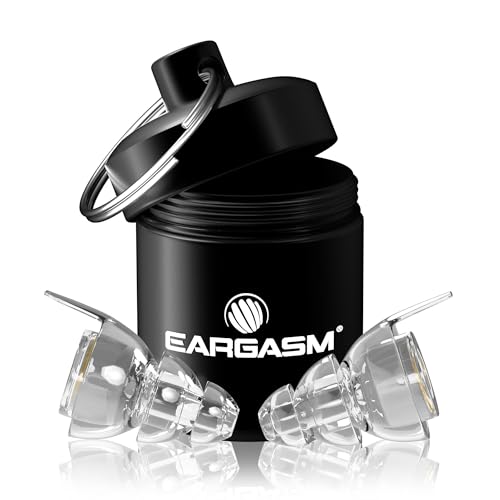
The Eargasm High Fidelity pair is the choice for campers who want to turn the volume down without losing the sounds that matter. Instead of blocking the ear canal with foam, it uses a small acoustic filter inside a soft silicone shell. The filter lowers sound evenly across frequencies, so music around a campfire still sounds like music, voices stay clear, and you can follow a conversation without taking the plugs out. It is the most natural-sounding plug in this guide, and the difference is obvious the first time you wear it at a noisy gathering.
Noise reduction is rated at up to 21 dB, with an NRR of 16 dB. Those figures are lower than foam, but the even reduction means the result feels more useful than the numbers suggest: the harsh edge comes off loud sounds, while quieter sounds stay audible. A generator becomes a distant hum, a loud group becomes a murmur, and an alarm or a child calling still cuts through. For campers who find foam plugs isolating or who dislike the plugged-up feeling of a full seal, this filtered design is far more comfortable to wear for hours.
Fit is handled by two interchangeable shell sizes in the same pack, standard and small, so you can choose the shell that seals your ear without pressing. The shells are made from hypoallergenic silicone, and the plugs come with an aluminium keychain case that protects the filters and keeps the pair together. The case is a real asset at camp: it clips to a pack or a key ring, it keeps dust and grit away from the filters, and it is far harder to lose than a loose pair in a pocket. The retail packaging measures 4.37 x 2.01 x 4.96 inches, which gives a sense of how compact the whole kit is.
This is the premium pick for evening use. Around a campfire, at a festival campsite, or on a group trip where the social hours run late, the Eargasm pair lets you stay in the conversation while protecting your hearing from the loudest moments. It also suits campers who are sensitive to noise during the day, for example near a busy road or a site with machinery, because it takes the edge off without cutting you off from your surroundings. The plugs are reusable and easy to clean, so one pair covers many trips.
The limitations are clear and worth weighing. This is not the plug for the lightest sleeper next to the loudest site: a foam plug will block more sound, and if your only goal is maximum quiet, the filtered design will leave you wanting more. There is only one pair in the pack, so losing a plug means replacing the whole set, and the plugs are visible in the ear rather than discreet. The cost is higher than any disposable option, so the value depends on using them often rather than leaving them in a drawer between trips.
Choose the Eargasm High Fidelity pair if you want to hear clearly at a lower volume, spend evenings around a fire or at festival campsites, or find foam plugs too isolating. Fit both shell sizes at home before the trip, keep the case on your keys so the pair is always with you, and treat the filters gently when cleaning so they keep their even sound.
Specs
- Material: Hypoallergenic silicone shells with acoustic filters
- Noise reduction: Up to 21 dB, NRR 16 dB
- Fit: Two interchangeable shell sizes, standard and small
- Pack size: 1 pair with aluminium keychain case
- Reusable: Yes, washable and reusable
- Case: Aluminium keychain case included
- Retail packaging dimensions: 4.37 x 2.01 x 4.96 inches
- Best for: Evenings around the fire, festival campsites, hearing clearly at lower volume
4. 3M E-A-R Classic Ear Plugs

The 3M E-A-R Classic is the workhorse of this guide: a simple foam plug, sold in a bulk box, that does one job very well. Each plug is a cylinder of slow-recovery foam. You roll it thin between your fingers, slide it into the ear canal, and hold it while the foam expands into a seal. The noise reduction rating is 29 dB, the highest in this guide, and the difference is noticeable on a loud site. A generator, a snoring neighbour, and a late-night group all drop to a distant murmur, and light sleepers get the best chance of sleeping through the night.
The bulk format is the point. This listing is a box of 200 individually wrapped pairs, which sounds like a lot until you count the uses: a family of four on a week-long trip uses a pair each per night, and a group of friends on a festival weekend can go through dozens. Individually wrapped pairs stay clean in a pack, can be handed out to anyone who needs them, and mean nobody has to reuse a dirty plug. For group camping, car camping with friends, or a scout trip, this is the most practical option in the guide.
Foam plugs are also the easiest to fit correctly once you know the technique, and the technique matters more than the brand. Roll the plug into a thin cylinder, reach over your head with the opposite hand and pull the top of the ear gently upward, slide the plug in, and hold it in place for a few seconds while the foam expands. A plug that is pushed in without rolling will not expand fully and will leak sound, so the few seconds of fitting are worth the effort. The Classic is made from a slow-recovery foam that gives you time to fit it before it expands, which helps beginners get a good seal.
There are honest limits. The plugs are disposable, and a pair that has been worn for a night or two collects moisture and wax and stops expanding properly, so it should be replaced rather than reused. The foam is bright yellow, which makes a dropped plug easy to spot in a tent, but the plugs are small and light, so they can blow away in wind if they are left out. They are also an industrial product in origin, made for workplace hearing protection, so they should be used as directed and fitted properly rather than forced into the ear.
For campers, the practical advice is to decant what you need. Take a handful of wrapped pairs in a small zip bag and leave the box at home, where it will last the season. Keep the bag in the same place every night, and put a few pairs in a jacket pocket as spares, because a plug dropped on a tent floor at midnight is not worth hunting for when a fresh pair is in reach.
Choose the 3M E-A-R Classic if you camp in groups, sleep lightly, want the strongest noise reduction in this guide, or like the simplicity of a fresh pair every night. Learn the rolling technique at home, carry spares in a pocket, and replace each pair after a night or two rather than stretching it.
Specs
- Material: Slow-recovery PVC foam
- Noise reduction: NRR 29 dB
- Fit: Roll-down foam cylinder, expands to seal the canal
- Pack size: 200 individually wrapped pairs per box
- Reusable: No, disposable, replace after a night or two
- Water blocking: No, designed for noise reduction
- Best for: Groups, families, light sleepers, loud sites
5. Decibullz Custom Molded Earplugs

The Decibullz Custom Molded pair is the premium pick in this guide, and the only one shaped exactly to your ears. The plugs are made from a thermoplastic material that softens in hot water. You heat a plug, let it cool for a few moments, press it into your ear, and hold it while it sets into the shape of your ear canal and outer ear. The result is a plug that fits only you, seals consistently, and stays put when you roll over, sit up, or pull a sleeping bag hood over your head.
Noise reduction is rated at 31 dB, the strongest figure in this guide, and the custom fit is what makes that figure achievable in practice. A plug that matches the ear does not leak sound around the edges, and it does not work loose during the night, so the protection you get at midnight is the same as the protection you got when you fitted it. That consistency is the main reason to choose a molded plug over a generic foam pair, especially for campers who have tried foam and found that it always slips or aches.
The fitting process takes a little patience the first time. You need hot water, a few minutes, and a mirror or a patient friend, so it is a job for home before the trip, not for a dark tent on the first night. Once the plugs are molded, they can be remolded if the fit is not right, which takes the pressure off getting it perfect on the first attempt. The plugs come with a carry case, and the molded shape is easy to grip, so taking them out in the dark is simple.
Comfort through a full night is excellent, because the plug fills the ear without pressing hard on any one spot. Side sleepers benefit most, since the molded shape sits flush and does not push deeper when the ear rests on a pillow. The plugs are reusable for many trips, they can be washed, and they are tough enough to survive being dropped, stepped on, or rattled around in a pack. For campers who go out every weekend, the cost spreads across many nights, and the plugs become part of the standard kit rather than a consumable to replace.
The trade-offs are the fitting effort and the cost. This is the most expensive option in the guide, and it asks for ten minutes of preparation before it can be used at all. A camper who only goes out once or twice a year may not get the value from it, and anyone who loses small items regularly should be careful, because a lost molded plug cannot be replaced with a spare from a bulk box. The plugs are also bulkier than a foam pair, so they need their case and a fixed place in the pack.
Choose the Decibullz Custom Molded pair if you camp often, have struggled with the fit of every other plug, sleep on your side, or want the strongest and most consistent noise reduction available. Mold them at home well before the trip, test them for a full night, remold if anything presses or leaks, and keep the case in the same pocket every night so the pair is always easy to find.
Specs
- Material: Thermoplastic custom-mold material
- Noise reduction: NRR 31 dB
- Fit: Heat, shape and cool to the exact shape of your ear, remoldable
- Pack size: 1 pair with carry case
- Reusable: Yes, washable and reusable for many trips
- Water blocking: Yes, the molded seal blocks water
- Best for: Frequent campers, hard-to-fit ears, maximum noise reduction
Camping Earplugs at a Glance
The five plugs in this guide cover the main ways to get quiet at camp, and the right choice depends on your ears and your trip rather than on a single figure. The Mack’s Pillow Soft is the most comfortable for sensitive ears and side sleepers, and the only plug here that doubles as a swimming plug. The Loop Quiet is the best reusable pair for regular campers, with a low profile and a set of tip sizes that make a good fit easy to find. The Eargasm High Fidelity pair is the best for evenings and social camping, because it lowers volume evenly and keeps voices clear. The 3M E-A-R Classic gives the strongest noise reduction per pair and the best value for groups, with a fresh pair for every night. The Decibullz Custom Molded pair is the premium choice for campers who want a fit shaped to their own ears and the most consistent seal in the guide.
If you are buying for a family, the practical answer is often a combination: a bulk box of foam plugs for everyone, plus one reusable or moldable pair for the lightest sleeper in the group. If you are buying for yourself and you camp alone, choose by sleeping position first. Side sleepers should start with putty, a low-profile reusable plug, or a molded pair. Back sleepers can choose on noise reduction alone and will be happy with foam. If you have small ear canals, look for a plug with multiple tip sizes or a moldable design, and try the fit at home before you rely on it in the field.
Noise reduction figures are a guide, not a guarantee, and the plug that seals well in your ear will always beat the plug with the higher figure that sits loosely. Fit the plug properly, give foam time to expand, let putty warm and seal, and check the fit by talking: your own voice should sound muffled and distant when the seal is good. If it does not, refit the plug rather than accepting a poor seal for the night.
Fitting, Cleaning and Packing Earplugs at Camp
Fitting is a skill, and a few minutes of practice at home will save a bad night at camp. For foam plugs, roll the plug into a thin cylinder, pull the ear gently upward with the opposite hand, slide the plug in, and hold it for a few seconds while the foam expands. For putty, warm the disc between clean fingers, shape it into a ball, and press it over the ear opening, smoothing the edges until it seals. For flanged silicone plugs, choose the tip size that seals without pressing, insert with a gentle twist, and check that the plug sits comfortably without sticking out. For filtered plugs, fit both shell sizes and keep the one that seals. For molded plugs, follow the heating and shaping steps at home, test the fit for a full night, and remold if anything aches or leaks.
Cleaning matters more at camp than at home, because hands, tents, and wash bags are rarely clean. Wash your hands before fitting any plug, and wash reusable plugs with mild soap and water after each trip, drying them fully before they go back in the case. Putty plugs should be kept in their case whenever they are not in your ears, and replaced when they stop feeling tacky or look dirty. Foam plugs should be replaced after a night or two, and never shared between people. Filtered plugs need their filters kept free of wax and grit, so clean them gently and store them in their case.
Packing is simple if you give earplugs a fixed home. A small zip bag or a dedicated pocket in a wash bag works well, and the bag should be the same place every night so you can find it in the dark. Carry spares: a spare pair of foam plugs weighs nothing and saves a night if a plug is dropped, and a spare putty pair is worth packing for the same reason. Keep the case clipped to a key ring or a pack strap if you use a reusable pair, so it is not left behind in a tent pocket. On a hiking trip, decant foam plugs into a tiny bag and leave the bulk box at home. On a car-camping trip, bring the box and hand pairs out freely.
A last tip is to test your alarm. Earplugs soften sound but do not block it completely, and a loud alarm will still wake most people. If you rely on a quiet alarm, set it to vibrate as well, place the phone close to your sleeping mat, and test the combination at home with the plugs in. Parents sharing a tent with children should choose a filtered plug or a lower-rated plug for the night, so a child calling out is still easy to hear.
Frequently Asked Questions
Can I hear my alarm with earplugs in at camp?
Yes, in most cases. Earplugs lower the volume of sound rather than removing it, so a loud alarm, a voice calling your name, or a child crying will still get through, although it will sound quieter and more distant. If you rely on a quiet alarm, set it to vibrate as well and keep the phone close to your sleeping mat. Test the combination at home with the plugs in before you rely on it on a trip.
Are foam earplugs or silicone earplugs better for camping?
Foam plugs give stronger noise reduction and cost very little, which makes them ideal for groups and loud sites, but they press inside the ear and can ache for side sleepers. Silicone plugs, whether moldable putty or reusable flanged tips, are more comfortable for long nights and easier to wash and reuse, but they block a little less sound. Campers who sleep lightly on noisy sites usually prefer foam, while side sleepers and sensitive ears usually prefer silicone.
How long do camping earplugs last?
Disposable foam plugs last a night or two and should be replaced when they stop expanding or look dirty. Moldable putty pairs last several nights if they are kept clean and stored in their case, and should be replaced when they stop feeling tacky. Reusable silicone, filtered, and molded plugs last many trips if they are washed with mild soap and water and dried fully before storage. Replace any plug that no longer seals well, feels uncomfortable, or looks damaged.
Can I use camping earplugs for swimming as well?
Moldable silicone putty and custom molded plugs seal over or inside the ear in a way that blocks water, so they work for swimming and showering as well as sleeping. Foam plugs absorb water and are not suitable for swimming, and reusable flanged plugs are splash resistant rather than waterproof. If your trip includes swimming, choose a putty or molded plug, and dry your ears after swimming before fitting a plug for the night.
Conclusion
Quiet sleep at camp is not a luxury, it is the difference between a trip you enjoy and a trip you endure. A neighbour’s generator, a late-night group, and the dawn chorus are all part of camping, but they do not have to keep you awake. The right earplugs weigh almost nothing, fit in the smallest pocket of a pack, and turn a noisy site into a restful night.
For most campers, the Mack’s Pillow Soft Silicone Earplugs are the best place to start. They are comfortable for side sleepers, gentle on sensitive ears, and useful for swimming as well as sleeping. Regular campers should look at the Loop Quiet for a reusable pair that lasts the season, and anyone who wants to hear conversation clearly at a lower volume should consider the Eargasm High Fidelity pair. Groups and families get the best value from a bulk box of 3M E-A-R Classic foam plugs, and campers who have never found a plug that fits should try the Decibullz Custom Molded pair.
Buy your pick before the trip, try it for a night at home, and pack a spare pair in a fixed place you can find in the dark. Your first night under canvas should be a quiet one, and with the right earplugs, it will be.
Product and ASIN Reference
| Product | ASIN |
|---|---|
| Mack’s Pillow Soft Silicone Earplugs, 12 Pair | B07G1MWHNR |
| Loop Quiet Ear Plugs | B08MFGJ9V1 |
| Eargasm High Fidelity Earplugs | B075SJ3Y8M |
| 3M E-A-R Classic Ear Plugs, 200 Pairs | B008MCU2M4 |
| Decibullz Custom Molded Earplugs | B01N129AQ8 |