Key takeaways
- Compare the best kids juggling balls and scarves sets for beginners, covering soft beanbag balls, floaty scarves, sizes, weights and age fit.
Juggling looks like a party trick, but for kids it is really a patience and coordination builder disguised as play. The catch is that the wrong first set can end the fun in an afternoon: balls that bounce under the sofa, roll across the room or feel too big for small hands turn practice into a fetching game. Soft beanbag balls land where they drop, and slow-falling scarves give beginners time to watch, reach and catch while the pattern clicks.
This guide compares five sets that suit children learning their first cascade: three beanbag ball sets in different sizes and counts, and two scarf sets, the traditional first step for younger children because a floating scarf falls slowly enough to track. Every pick is battery free, with no lights, sounds or small magnetic parts.
As an Amazon Associate, we earn from qualifying purchases.
Quick answer
For most kids, start with the Duncan Toys three pack for a true ball cascade, or the Lolakee scarves if the learner is under six. The ArtCreativity set suits small hands, the Patelai six pack covers siblings and spares, and the Colovis scarves fit groups. All five are soft, battery free and made to land softly where they drop.
Duncan Toys Juggling Balls, 3 Pack

Duncan is the name most adults remember from their own childhood, and this three pack is the classic starter set for a child who wants to learn real ball juggling. Each ball uses a soft vinyl shell filled with plastic beans, sewn in a four panel design that keeps its shape through months of drops on hard floors. The bean fill matters more than it sounds: instead of bouncing or rolling away, a dropped ball lands and stays put, so practice time goes on throwing and catching rather than chasing.
At about 2.25 inches across, the balls are sized for school age hands that can close around them comfortably, and the bright red and yellow panels are easy to track against a plain wall or a garden fence. The maker, Duncan Toys, lists this set (model 3830JG) for older children, with a minimum age of eight years, which matches the coordination a three ball cascade actually demands. Younger kids can still enjoy tossing one or two, but the full pattern is a better goal from around age seven or eight upward.
The vinyl surface wipes clean after outdoor sessions. There is no storage bag in the box, so a small drawstring pouch helps keep the trio together.
Best for: Kids aged eight and up who want the standard, durable three ball set for learning a proper cascade.
ArtCreativity Juggling Balls, Set of 3

The ArtCreativity set shrinks the beginner ball down to a size that younger children can actually grip. Each of the three balls measures about 2 inches across and weighs roughly 1.9 ounces, noticeably smaller and lighter than a standard juggling ball. That smaller footprint helps little hands close around the ball on the catch instead of batting it away, which is the most common frustration for five and six year olds learning the pattern.
The balls pair a vinyl outer cover with a pellet fill, so they share the same dead drop behaviour as the Duncan set: toss, miss, and the ball sits on the carpet waiting to be picked up. The four colour panels in blue, red, yellow and green make it easy for a child to follow one ball at a time during the two ball stage, and the stitching is firm enough to survive regular classroom or playroom use.
ArtCreativity lists the set for children from three to twelve years, and the packaging carries a clear choking hazard warning for children under three, so store it away from toddlers who still mouth toys. For a kindergartner who found standard balls clumsy, this is usually the set that finally lets the cascade come together.
Best for: Younger beginners, roughly ages four to seven, whose hands are too small for standard juggling balls.
Patelai Juggling Balls Set, 6 Pack

Most beginner sets stop at three balls, which is exactly enough until one rolls behind the bookcase. The Patelai pack doubles the count to six mini balls, so a child can lose one, share with a sibling or run two practice sets in different rooms without stopping. Each ball is about 2 inches square and weighs roughly 1.9 ounces, the same friendly mini format as the ArtCreativity set, but wrapped in stitched cloth rather than vinyl.
The cloth shell gives a softer, slightly grippy feel in the palm, and the plastic pellet fill keeps the same stay put behaviour on drops. Patelai gives the balls a slightly irregular round shape on purpose: they resist bouncing and rolling, which keeps practice in one spot. Six balls arrive in four bright colours, so two children can each take three in matching or mixed colours and learn side by side.
Cloth needs a little more care than vinyl: spot clean rather than soak, and dry fully before storage. In return, the set easily covers a family, a scout group or a classroom corner where several children want to learn at once.
Best for: Families and groups who want two learners practising at once, plus built in spares for the ball that always goes missing.
Lolakee Juggling Scarves, 12 PCS

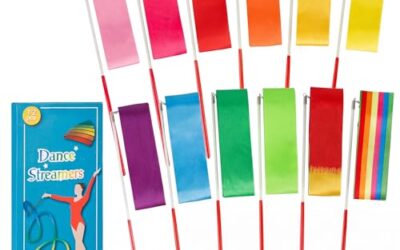
Ask a circus skills teacher where a young child should start and most will say scarves, not balls. A tossed scarf floats down slowly, giving a beginner a long, forgiving window to move a hand into place and grab it. That slower rhythm teaches the crossing pattern of the cascade without any of the sting or scatter of a dropped ball, which is why scarf juggling is the standard first step for preschool and early primary ages.
The Lolakee set includes twelve scarves, one in each of twelve colours, and each scarf measures about 24 by 24 inches, big enough to see clearly and grab with a whole hand. The fabric is a soft, silky material that drifts rather than drops, and the colours help a teacher or parent call out simple sequences: red across, blue across, catch. Because scarves weigh almost nothing, they are also the safest option for indoor practice around lamps, screens and younger siblings.
The maker advises that scarves should not go in the mouth and that young children play with supervision. Hand washing keeps the colours bright. Once a child can keep three scarves moving steadily, the jump to mini balls is short and far less frustrating.
Best for: Children under six, and any beginner who wants to learn the cascade pattern at a slow, confidence building pace.
Colovis Square Dance Scarves, 24 Pcs
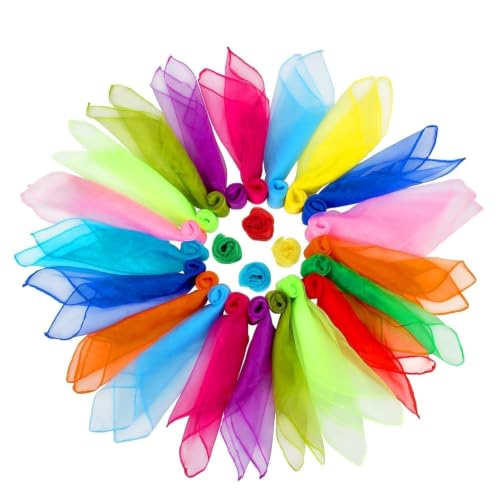
The Colovis pack is the group sized version of the scarf idea: twenty four scarves in twelve colours, with two of each colour, at the same generous 24 by 24 inch size. Pairs of matching colours open up simple partner and class activities that a single set cannot do, from mirror games and follow the leader to two children juggling a shared pattern between them. It is a natural fit for classrooms, dance and movement groups, birthday parties and families with several children.
The scarves are polyester, light and floaty with the same slow descent that makes scarves such a kind first prop. Colovis lists the set (model 826-dc-3) for children from twenty four months; the large, soft squares are easy for toddlers to wave and toss with supervision, while older children can work on genuine three scarf patterns.
Care is the one thing to note before buying for a big group: the maker advises against bleach and machine washing to protect the fabric, so plan on gentle hand washing and air drying. Stored in a bag or basket, the set stays ready for music and movement sessions as well as juggling practice.
Best for: Classes, groups and larger families who need matching scarf pairs and enough pieces for everyone to join in.
How to choose
Start with scarves for the youngest learners. Children under six, and older beginners who get frustrated quickly, learn faster with scarves because the slow fall gives them time to react. Move to balls once the crossing pattern feels natural.
Match ball size to hand size. A ball a child cannot close fingers around will pop out on every catch. Mini balls around 2 inches suit most children under eight; standard balls around 2.25 inches and up suit older kids and adults teaching alongside them.
Look for dead drop fill. Beanbag style balls filled with beans or pellets land and stay where they fall. Smooth, bouncy balls waste half of every practice session on retrieval and are a poor first juggling tool indoors.
Count the learners, not just the balls. Three balls teach one child. Six balls, or a big scarf pack, cover siblings, friends and spares, which matters more in real homes than any small difference in materials.
Keep it simple and battery free. Plain balls and scarves need no charging, make no noise and contain no magnets or button cells. For young children especially, the simplest prop is the safest prop.
Check the age label. Makers set minimum ages for a reason, and small balls carry choking hazard warnings for under threes. Scarves still need supervision with toddlers.
Who should skip
Families with children under three should skip the ball sets entirely for now; small balls are a recognised choking hazard, and the ArtCreativity set says so on its packaging. Start those children with scarves under supervision instead, or wait a year or two.
Skip these sets if a child wants bounce juggling, contact juggling or club and ring work. Every ball here is a dead drop beanbag made for the basic toss cascade, and clubs, rings and diabolos are separate props with their own beginner options.
Older children and teenagers who already juggle and want a heavier, performance weight ball should look elsewhere. These sets top out at light beginner weights chosen for small hands.
Finally, skip the big Colovis pack if you only have one learner and limited storage patience. Twenty four scarves is a lot of fabric for a single child, and the twelve piece Lolakee set covers the same learning path in a smaller bundle.
FAQ
What age can a child start learning to juggle?
Most children can start with scarves from around age three or four, with an adult nearby, because the slow fall matches their reaction speed. Ball juggling usually clicks between six and eight, once hand size and coordination catch up; the Duncan set is listed by its maker for ages eight and up, while the mini ball sets suit the younger end of that range.
Are scarves or balls better for a first set?
Scarves are better for learning the pattern, and balls are better for learning the skill itself. A scarf drifts down slowly, so a child can fix mistakes mid flight, while a ball demands the timing that real juggling needs. Many teachers start kids on scarves for a week or two, then switch to mini balls.
How many balls does a beginner actually need?
Three. The basic cascade uses three balls, and every set in this guide provides at least that. Extra balls are about convenience, not difficulty: a six pack means a lost ball does not end practice, and two children can learn together. There is no benefit to handing a beginner five or seven balls until the three ball pattern is steady.
How do you clean juggling balls and scarves?
Vinyl balls wipe clean with a damp cloth and dry in minutes. Cloth balls are better spot cleaned and left to air dry fully so the fill stays fresh. Scarves prefer a gentle hand wash in cool water and air drying; Colovis specifically advises against bleach and machine washing for its set.
Final verdict
For a single child ready to learn ball juggling, the Duncan Toys three pack is the dependable default, with the ArtCreativity set the better fit for smaller, younger hands. The Patelai six pack wins for siblings and groups, while the Lolakee scarves are the kindest first step for under sixes and the Colovis pack covers whole classes. Soft, dead drop props and a little daily practice teach the cascade faster than any upgrade.
Product and ASIN Reference
| Product | ASIN |
|---|---|
| Duncan Toys Juggling Balls, 3 Pack | B08RGLQC1P |
| ArtCreativity Juggling Balls, Set of 3 | B07CRS18CY |
| Patelai Juggling Balls Set, 6 Pack | B07GZDZP73 |
| Lolakee Juggling Scarves, 12 PCS | B0CCTW1GTT |
| Colovis Square Dance Scarves, 24 Pcs | B07QDRPBFY |